
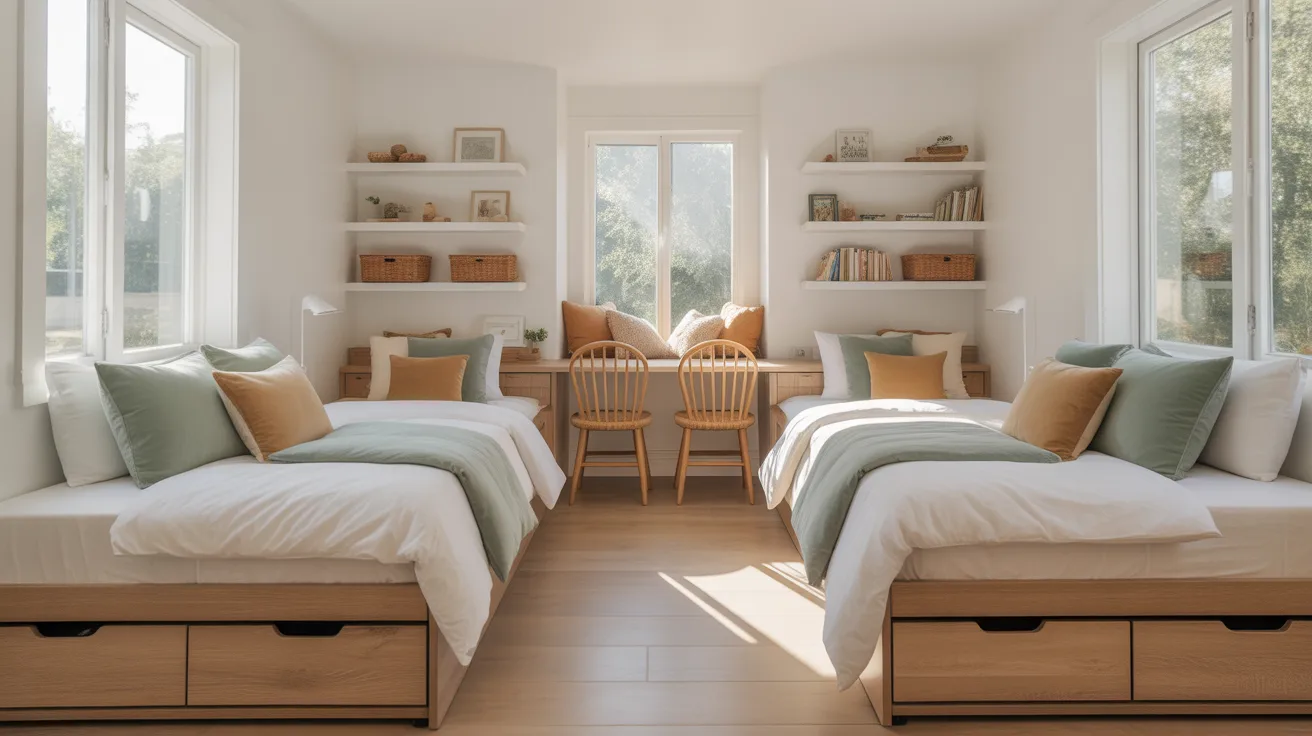
25 Shared Bedroom Ideas for Kids That Look So Clever
Sharing a kids’ bedroom sounds cute until you realize two little humans can somehow fill one room with twice the stuff and three times the chaos. One wants more shelf space. The other thinks the top bunk equals royal status. And somehow one sock still goes missing every single week. Still, when you plan the room well, a shared bedroom can look smart, feel cozy, and work beautifully for everyday life.
I actually love well designed shared kids’ bedrooms because they force you to think smarter. You cannot just throw in random furniture and hope the room behaves. You need a layout that feels fair, storage that actually helps, and style that still leaves room for real life. That is exactly where these shared bedroom ideas for kids come in.
The best shared bedroom ideas do not just look good in photos. They make mornings easier, bedtime calmer, and cleanup a little less painful. So if you want a space that feels clever, practical, and still fun for your kids, here are 25 ideas worth stealing.
1. Use Matching Twin Beds for an Easy Balanced Look
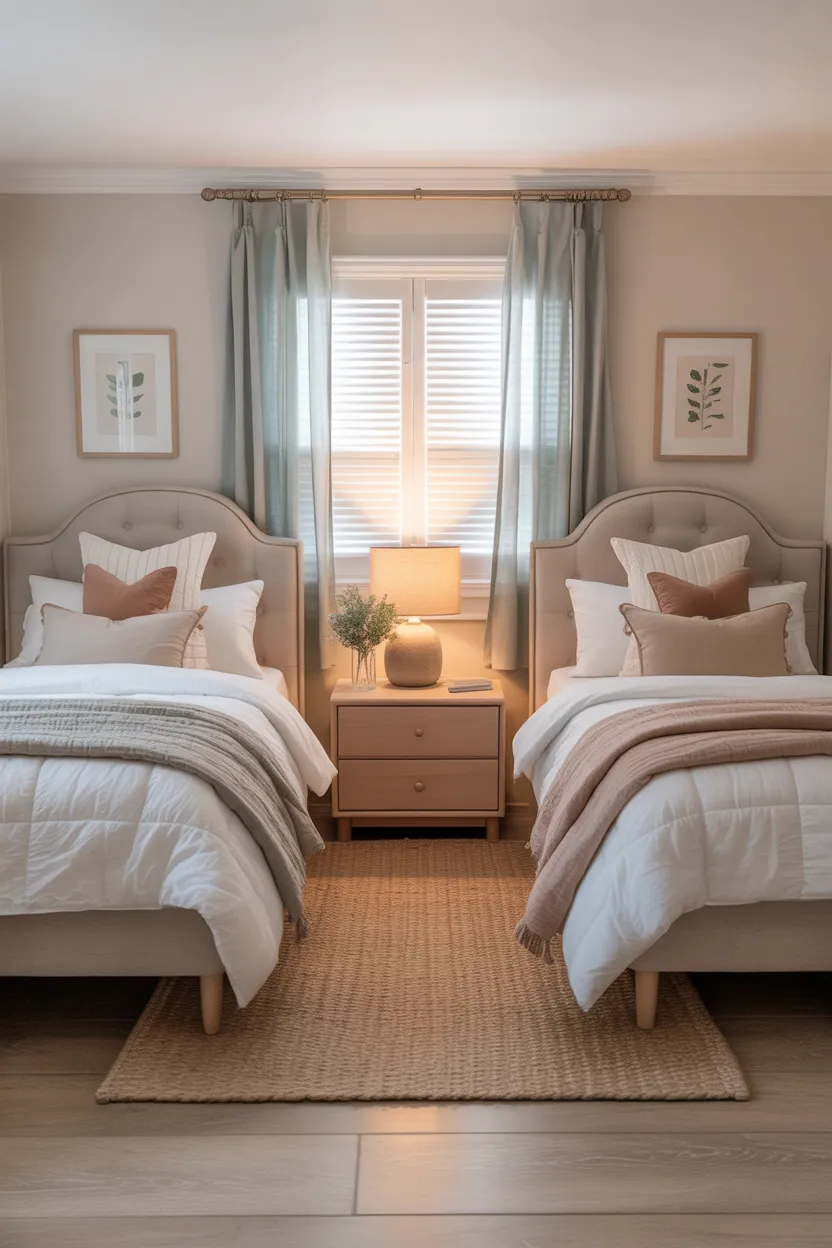
Matching twin beds make a shared kids’ room feel instantly pulled together. They create structure, symmetry, and a strong sense of fairness, which matters a lot when kids share a space. If one bed looks bigger, better, or more interesting, trust me, somebody will notice.
I love this setup because it gives you a clean base to build on. You can always personalize each bed with different pillows, blankets, or wall art later. Matching twin beds create a calm, balanced look that makes a shared bedroom feel more intentional.
2. Pick Bunk Beds When Floor Space Feels Tight
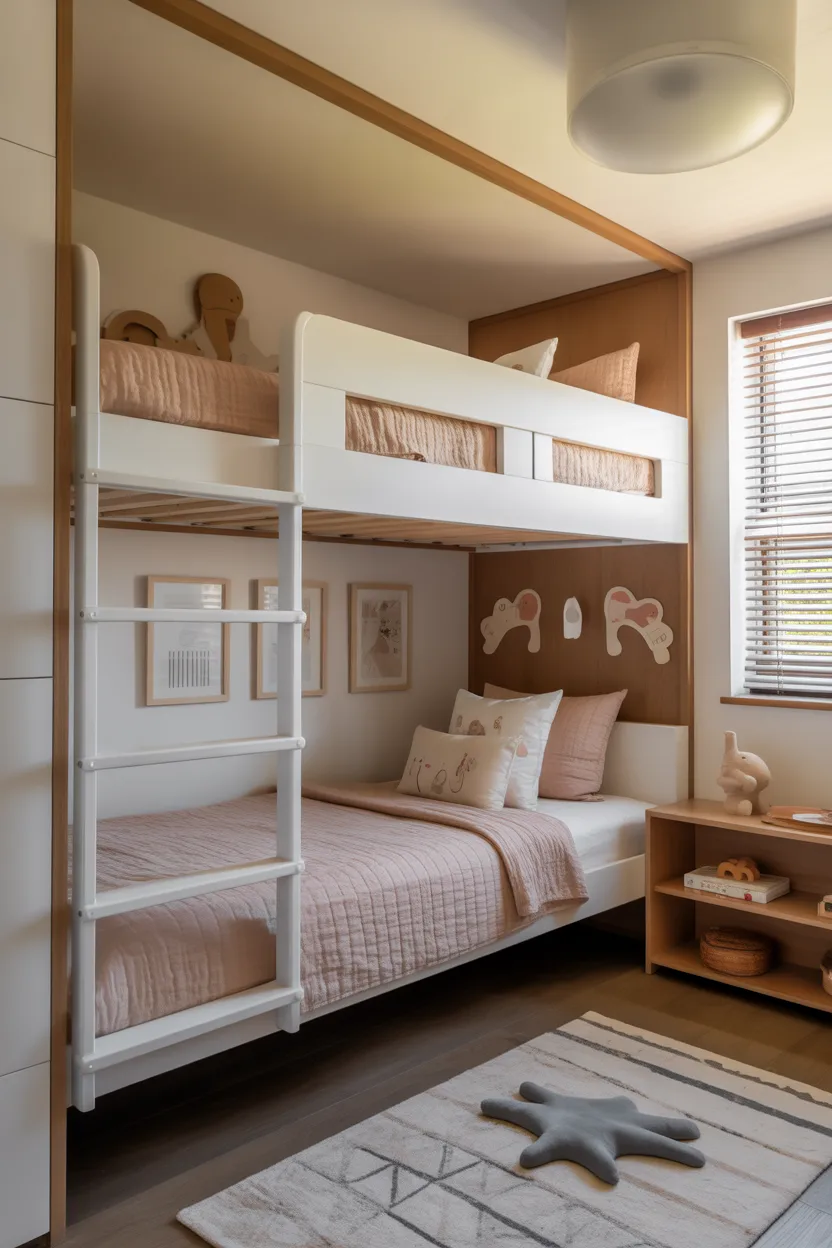
Bunk beds save a huge amount of floor space, which makes them one of the smartest shared bedroom ideas for kids. If your room feels small, this layout opens up the center so kids can play, read, or just move around without stepping on every toy they own.
A good bunk bed setup can also feel fun instead of cramped. Kids usually love the climbing part, and parents love getting actual usable space back. Bunk beds work best when you need a compact setup that still feels playful and practical.
Also Read: 20 White Kitchen Cabinet Ideas That Feel Bright and Timeless
3. Add a Shared Nightstand Between Two Beds
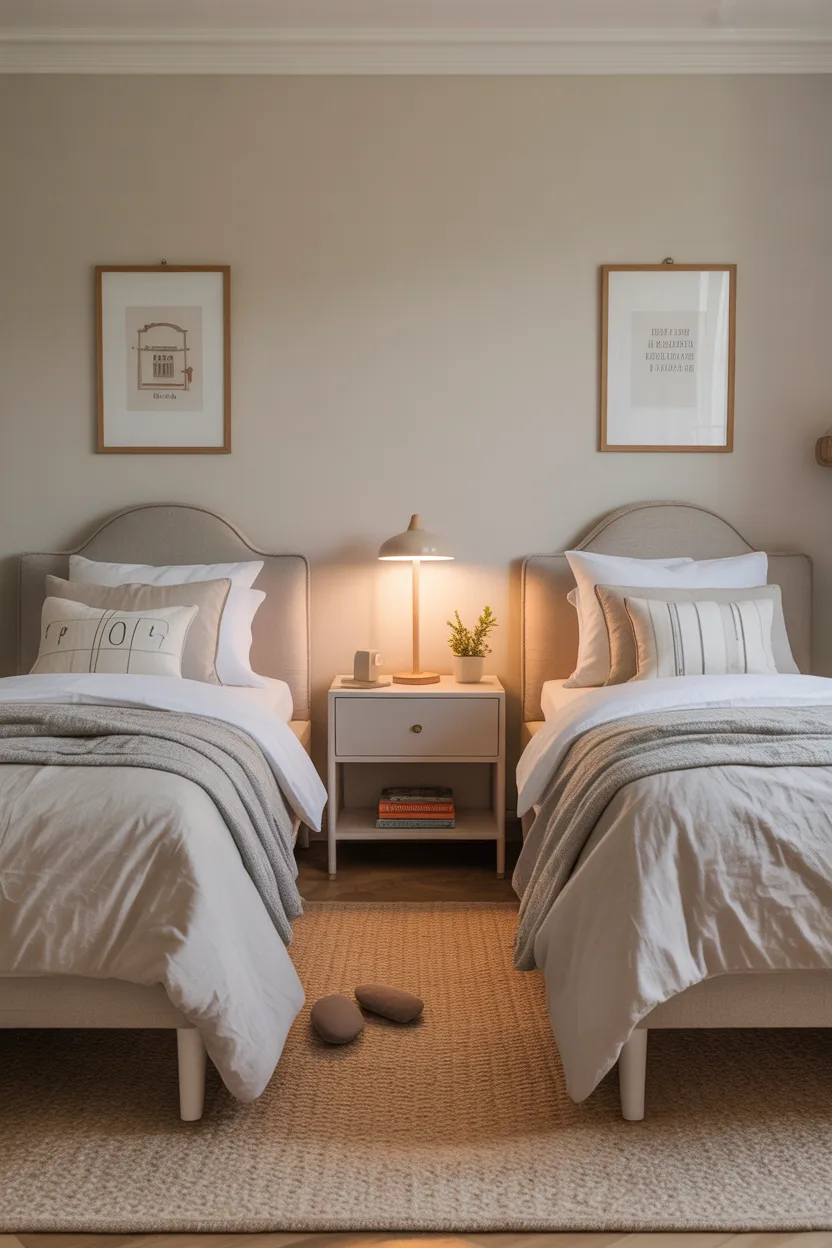
If you place two twin beds side by side with one nightstand in the middle, the room looks neat and polished right away. That center table creates a simple anchor and gives both kids a spot for books, a lamp, or small bedtime essentials.
This works especially well in narrow rooms where extra furniture would just crowd everything. It feels classic, clean, and easy to style. A shared nightstand saves space while helping the whole room feel organized and connected.
4. Give Each Child Their Own Color Accent
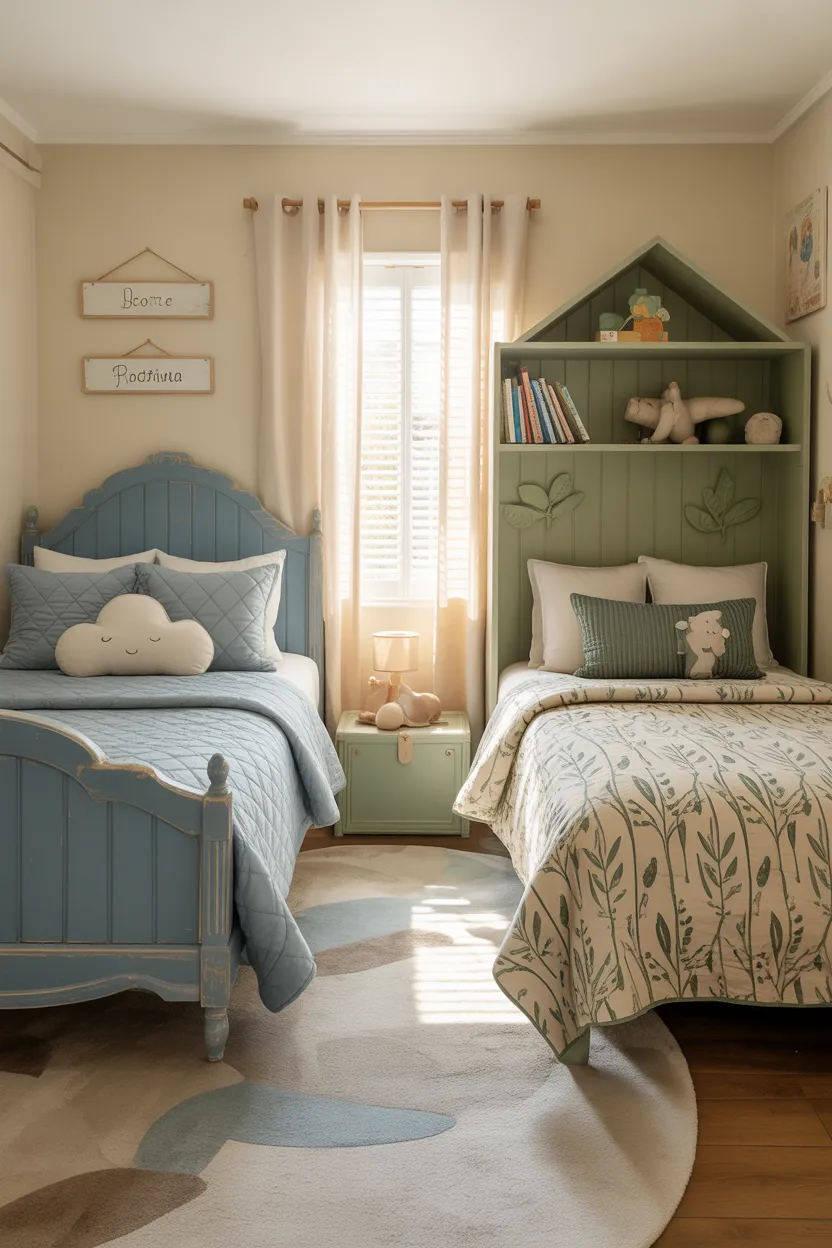
A shared room should feel united, but it should not erase personality. One of the easiest ways to solve that problem is by giving each child their own accent color. Keep the room’s main palette simple, then let each child show their style through bedding, art, baskets, or throw pillows.
This idea works so well because it gives both kids some ownership without making the room look messy. Ever notice how kids care deeply about tiny details when it involves fairness? Yeah, same. Personal color accents help a shared bedroom feel equal, customized, and visually fun.
5. Use Under Bed Storage for All the Extra Stuff
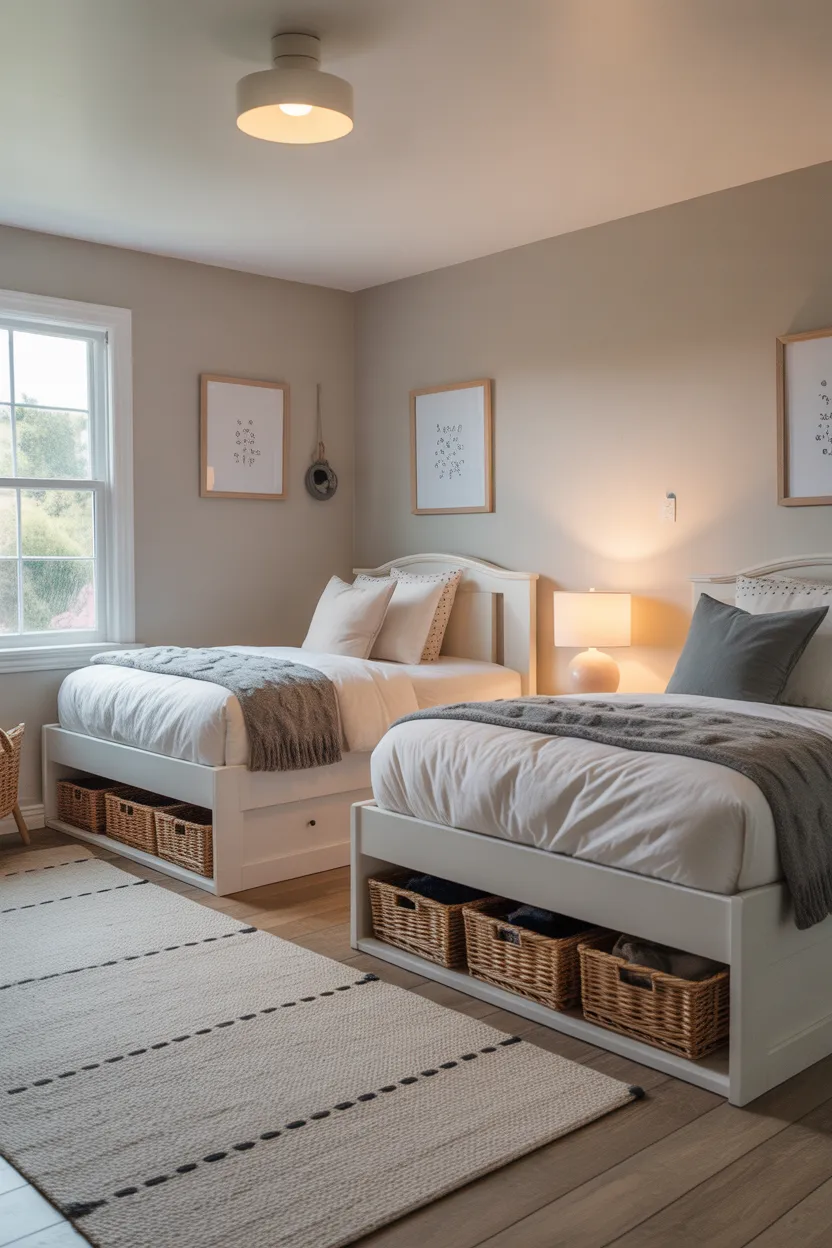
Under bed storage can save your sanity in a shared kids’ room. That space should never sit empty when you have extra clothes, toys, books, or bedding to store. Use rolling bins, drawers, or low baskets so everything stays easy to reach.
I always recommend this because it adds storage without taking up one more inch of floor space. In a shared room, that is a big win. Under bed storage helps reduce clutter and keeps the room feeling more open.
You can store things like:
- pajamas
- extra blankets
- toys
- shoes
- books
- seasonal clothes
6. Install Wall Shelves to Free Up the Floor
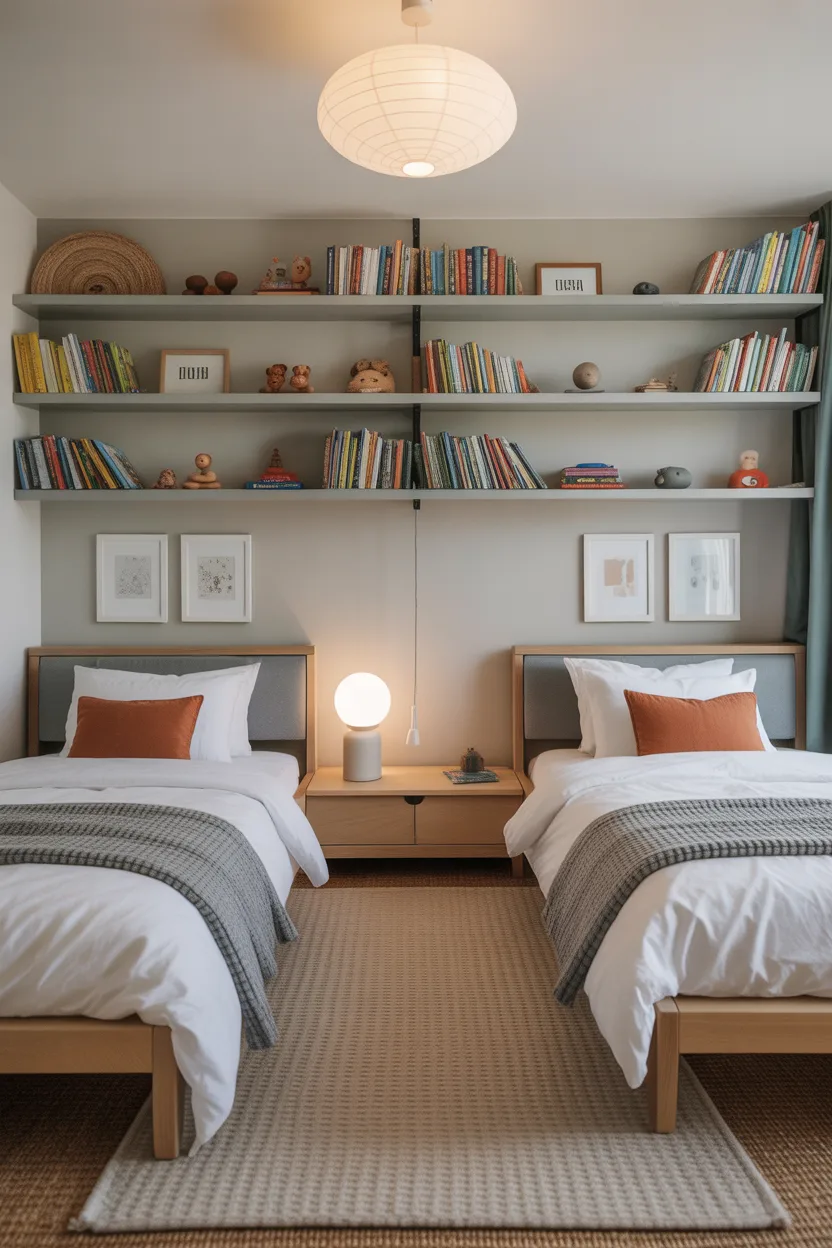
Wall shelves help you store more without crowding the room with bulky furniture. In a shared bedroom, that matters a lot because floor space disappears fast. You need room for beds, storage, movement, and maybe a tiny bit of peace.
I like adding a few shelves above each bed or along one main wall. Kids can use them for books, framed art, or a few favorite toys. Wall shelves add vertical storage and make a small shared room feel smarter and lighter.
7. Create Equal Personal Zones for Both Kids
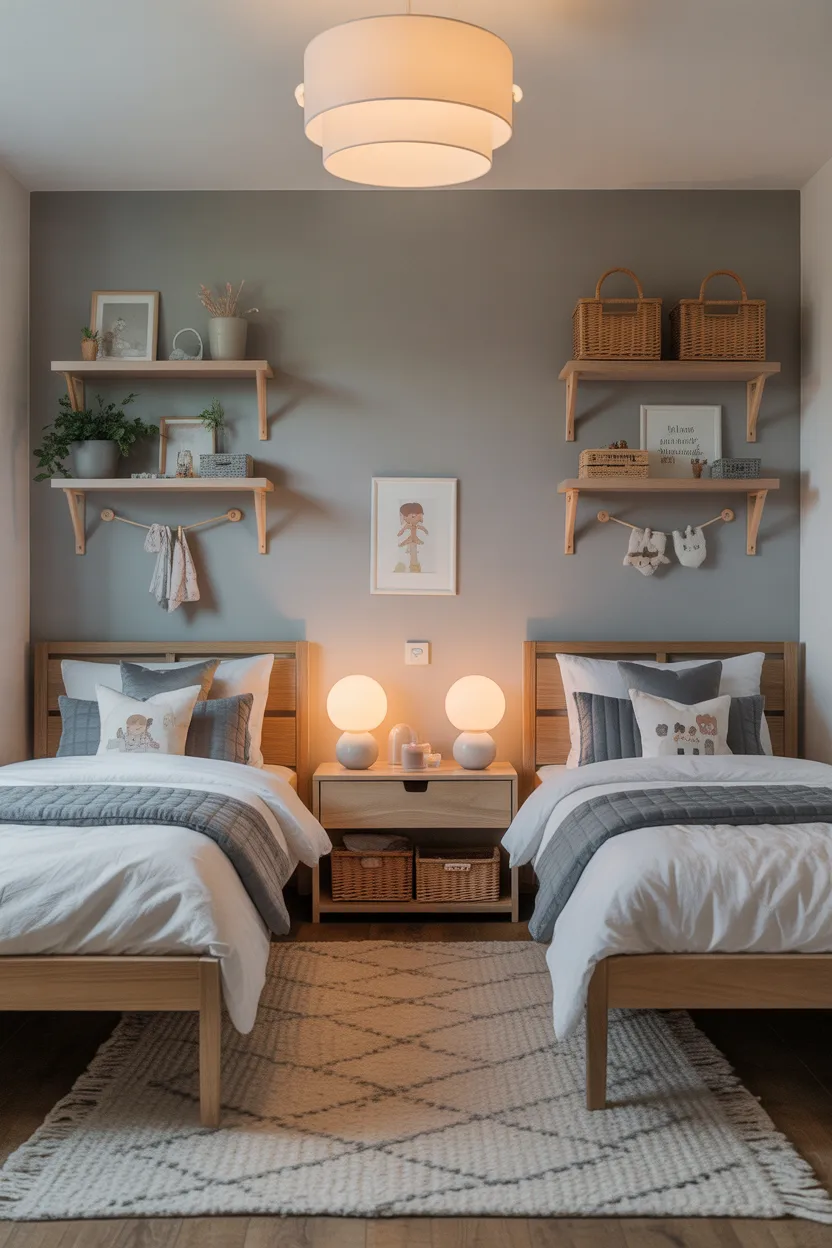
Kids do not just want space. They want their own space. Even in a shared bedroom, each child should have a little zone that feels clearly theirs. That could include their bed, a basket, a wall hook, a shelf, and maybe a small display spot for favorite things.
This idea cuts down on arguments because both kids know what belongs to them. It also makes the room feel more thoughtful and less random. Equal personal zones make a shared bedroom feel fair, functional, and easier to manage.
Also Read: 22 Bright Bedroom Color Ideas for Small Rooms That Open Up
8. Use One Long Shared Desk for Homework and Crafts
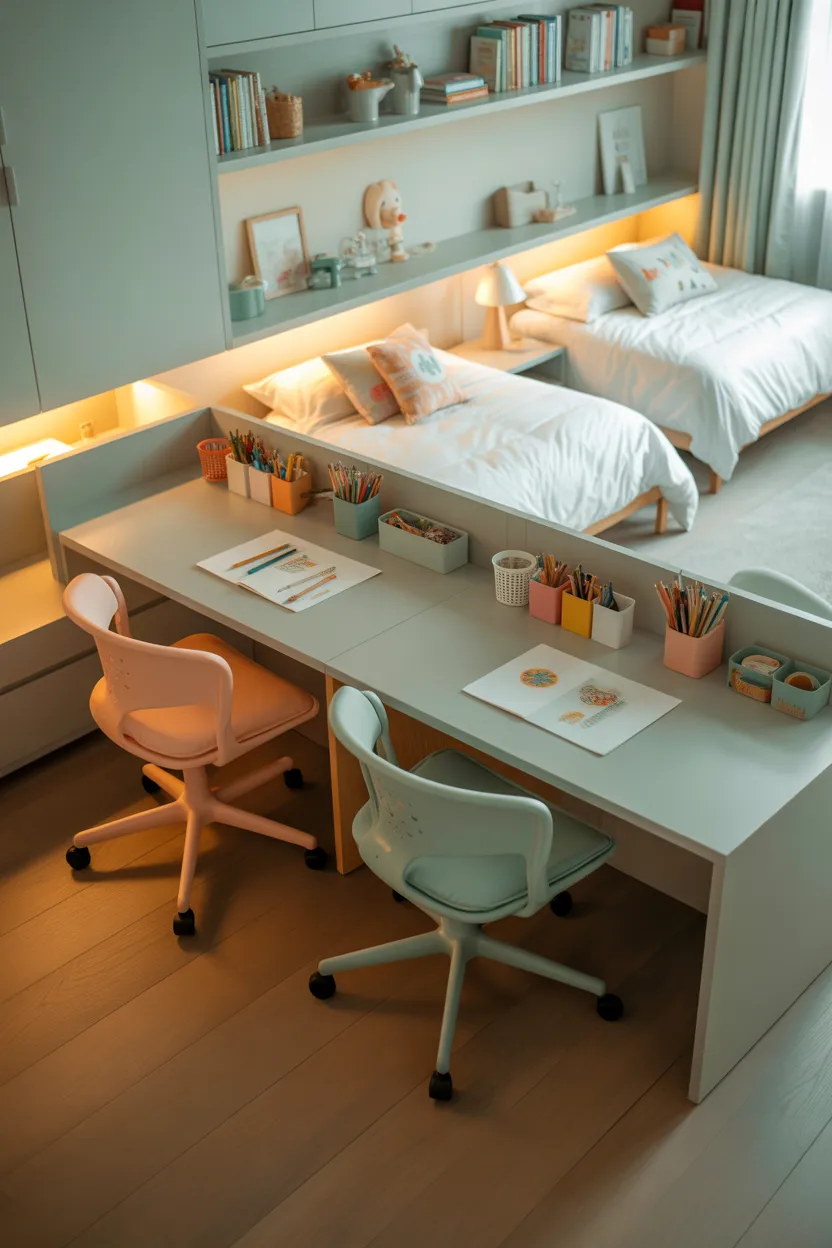
A long desk works beautifully in a shared bedroom for school age kids. Instead of squeezing in two separate desks, place one long desk along a wall and give each child their own chair and storage section. That keeps the room cleaner and more efficient.
I really like this setup because it works for homework, crafts, coloring, and quiet time. Plus, it usually looks better than trying to fit too many furniture pieces into one room. A shared desk adds function without making the room feel crowded.
9. Choose Beds with Built In Storage
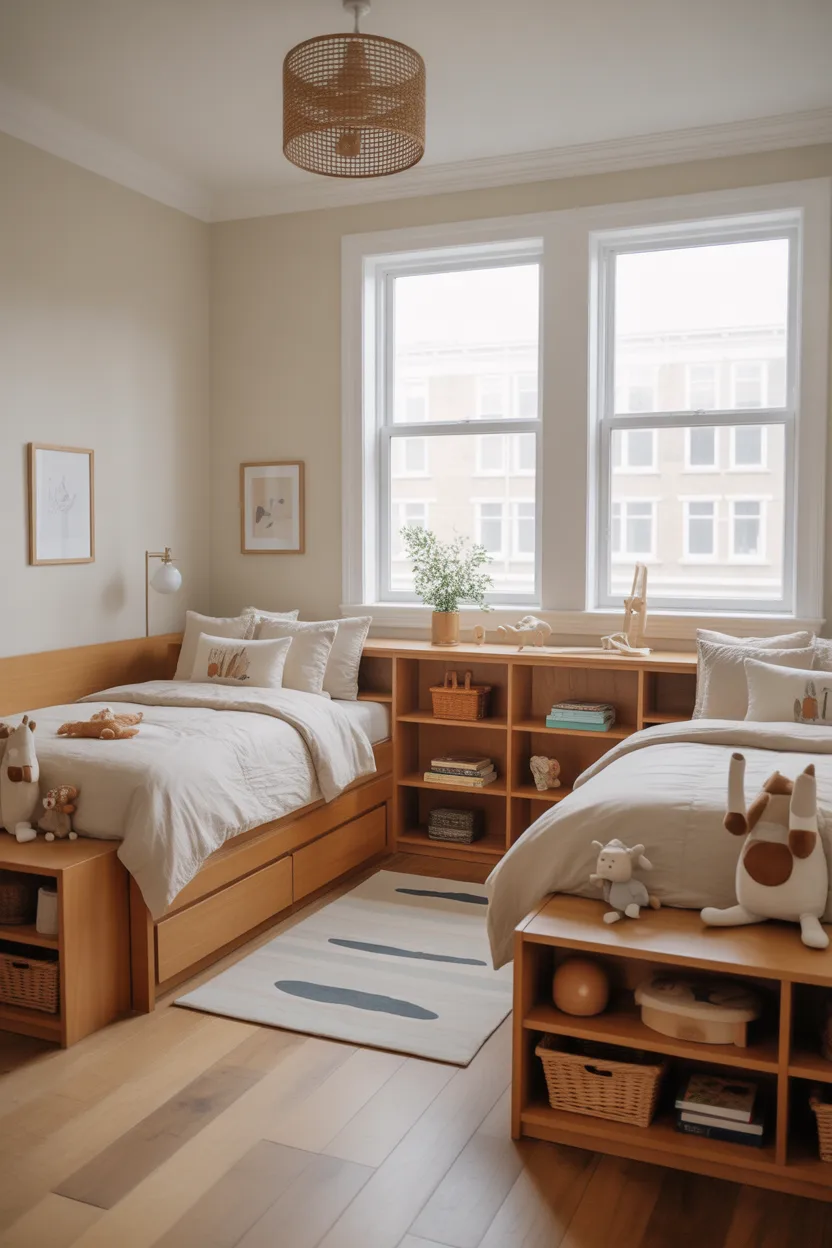
Furniture should work harder in a shared kids’ room. Beds with built in drawers, shelves, or cubbies can replace extra storage furniture and make the layout feel more efficient. That means fewer dressers, fewer bins, and fewer things fighting for space.
This is one of those upgrades that feels boring until you use it, then suddenly you never want to go back. Built in storage beds help shared bedrooms stay tidy while saving valuable space.
10. Add a Curtain or Divider for Extra Privacy
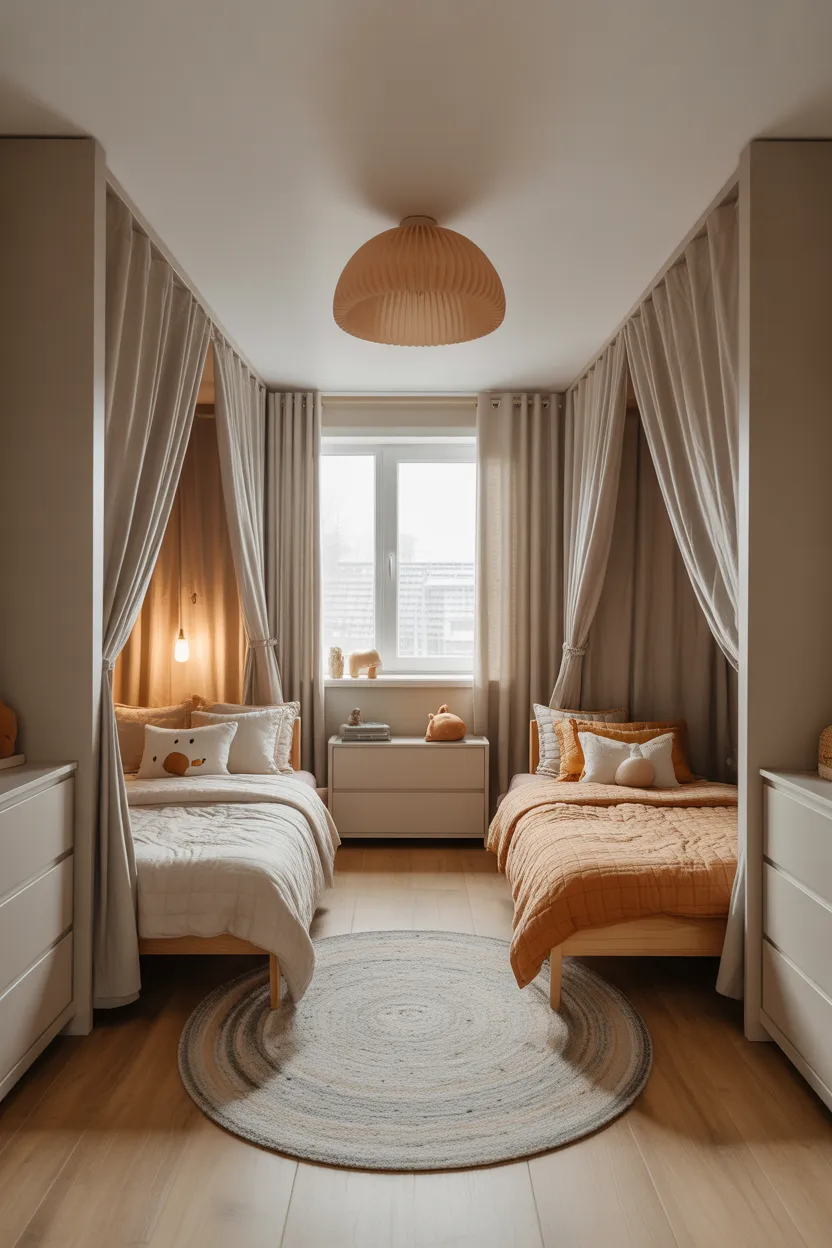
As kids grow, privacy starts to matter more. A shared room divider does not need to be dramatic. You can use a curtain, a low bookshelf, or even a narrow partition to create a little separation between sleep areas.
I think this works especially well for siblings with different ages or routines. Even a small visual break can help the room feel calmer and more comfortable. A simple divider gives kids a better sense of privacy without making the room feel closed off.
Also Read: 21 Teen Girl Bedroom Color Ideas That Feel Cute and Stylish
11. Keep the Wall Color Light and Soft
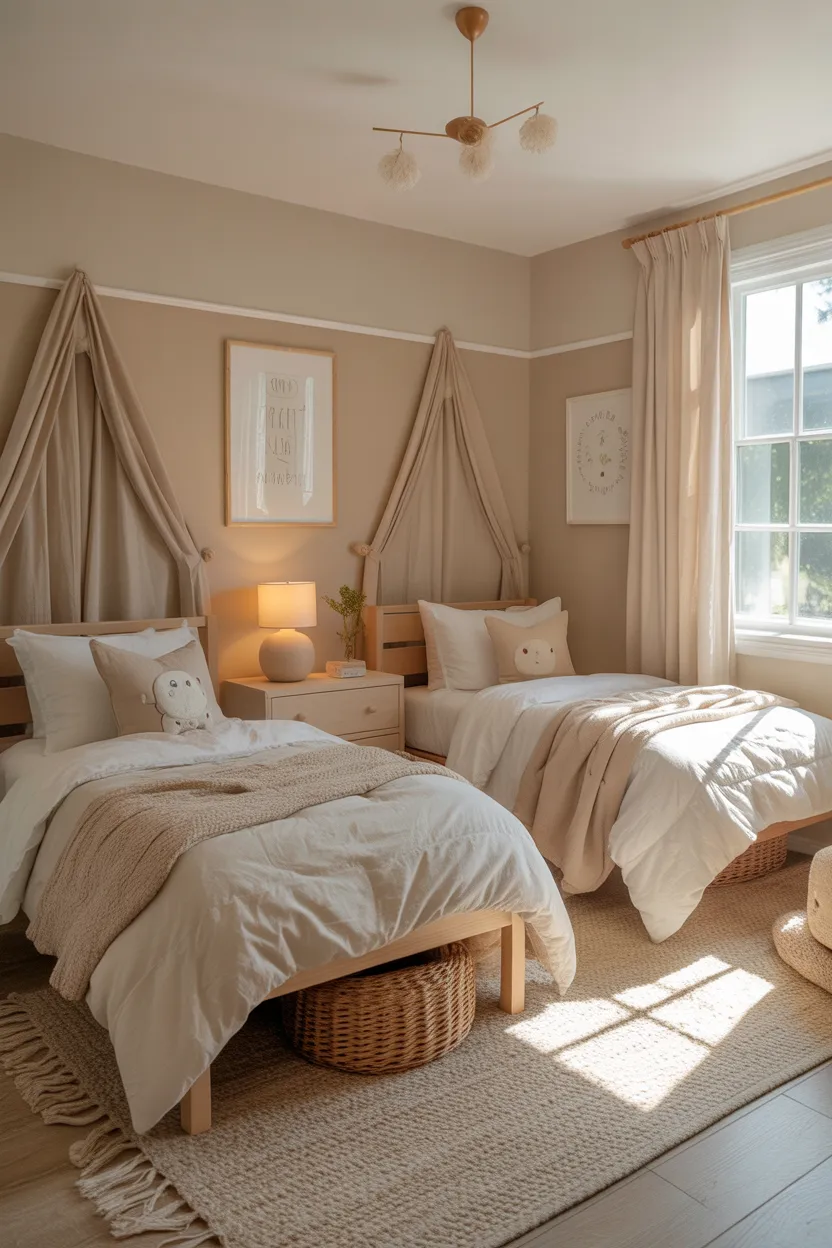
Light wall colors help a shared kids’ bedroom feel bigger, brighter, and less busy. That matters when two beds, two personalities, and a lot of stuff all need to fit in one room. Soft white, pale beige, light gray, soft sage, and dusty blue all work beautifully.
I usually prefer light tones because they give you more flexibility with decor later. They also help the room feel calmer, which never hurts at bedtime. Soft wall colors make shared bedrooms feel more open and easier to style.
12. Use One Big Rug to Tie Everything Together
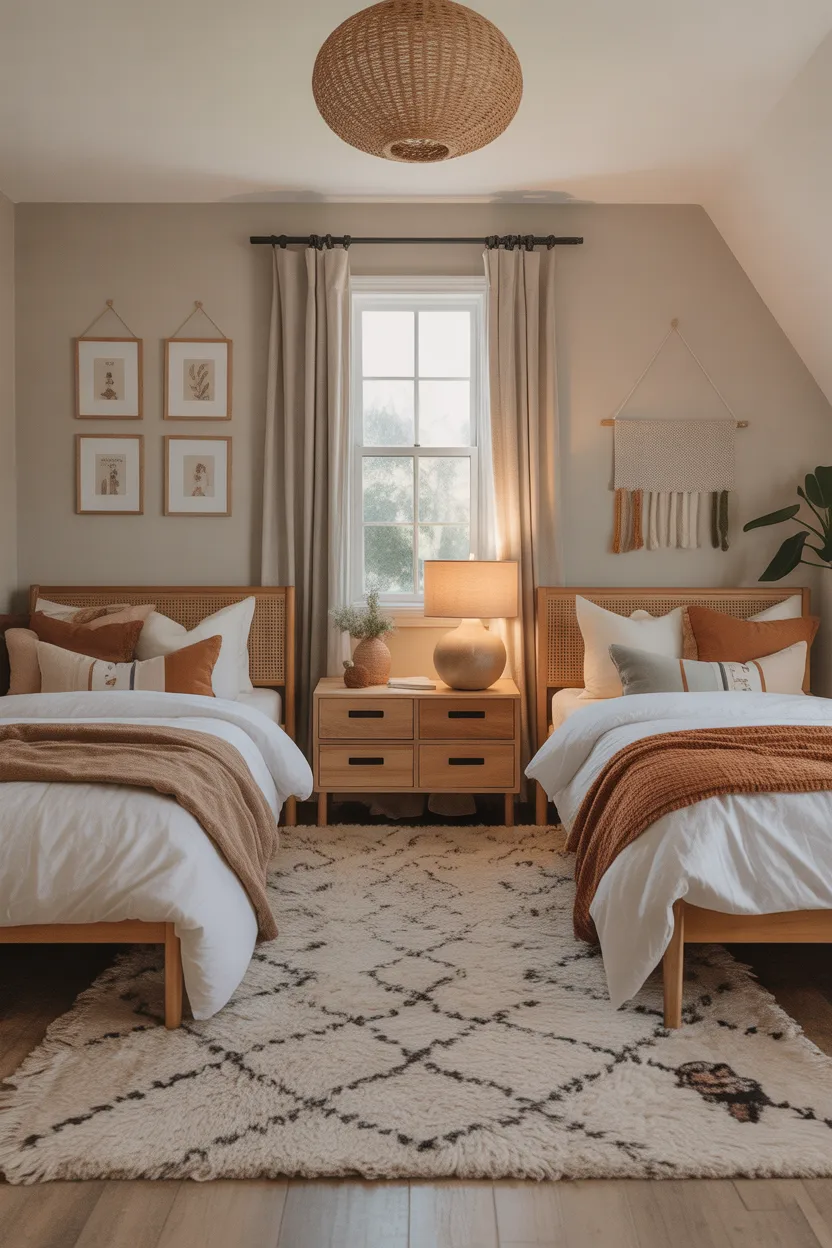
A large rug helps unite a shared bedroom and makes the space feel intentional. Instead of placing separate rugs by each bed, use one rug large enough to sit under both sleeping areas or cover most of the center floor.
This creates a more connected look and softens the room visually. It also makes playtime on the floor more comfortable, which kids always appreciate. One large rug helps a shared kids’ room feel cohesive, cozy, and well designed.
13. Label Baskets and Drawers So Cleanup Feels Easier
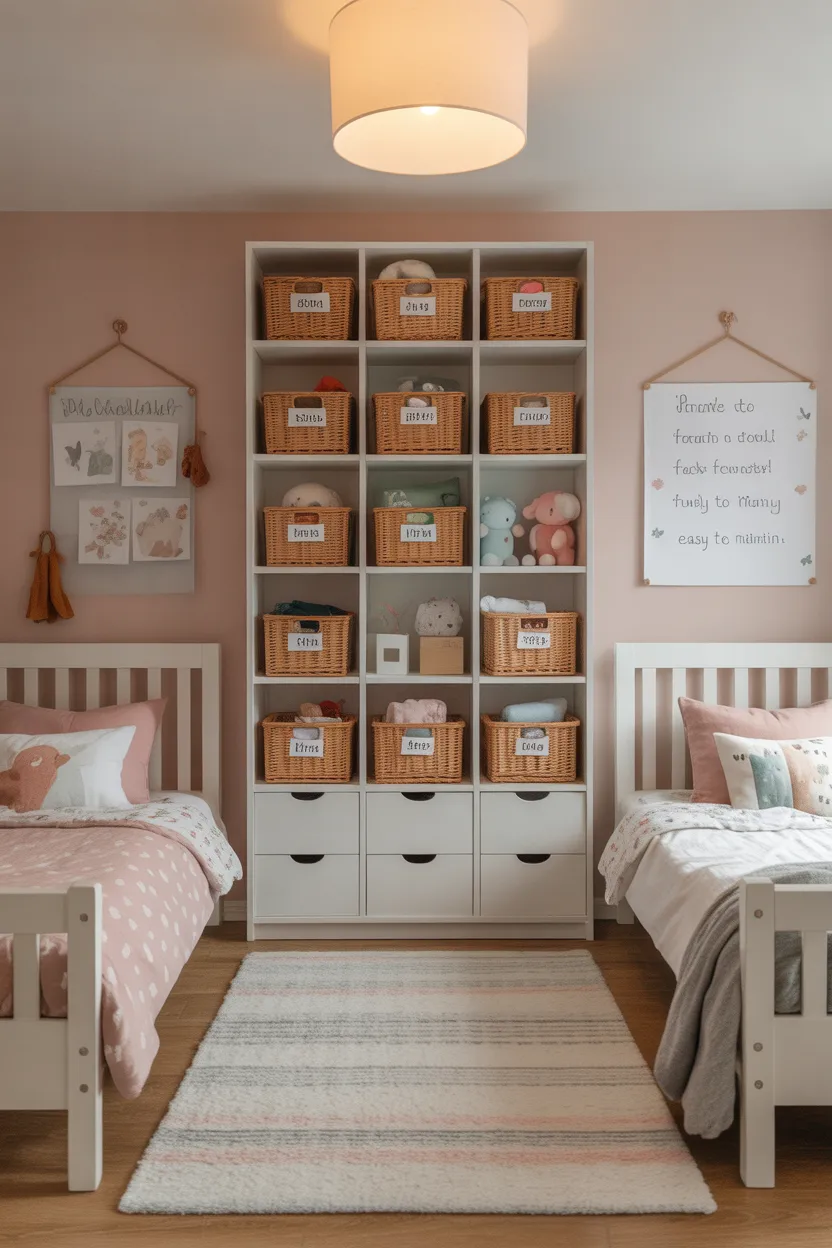
Shared rooms get messy fast when nobody knows where anything belongs. Labels fix that problem in a simple, practical way. Use labels on baskets, bins, drawers, and shelves so each child knows exactly where things go.
For younger kids, picture labels work really well. For older kids, simple written labels usually do the job. Labeled storage keeps the room more organized and makes cleanup less of a daily battle.
14. Add Personalized Art Above Each Bed
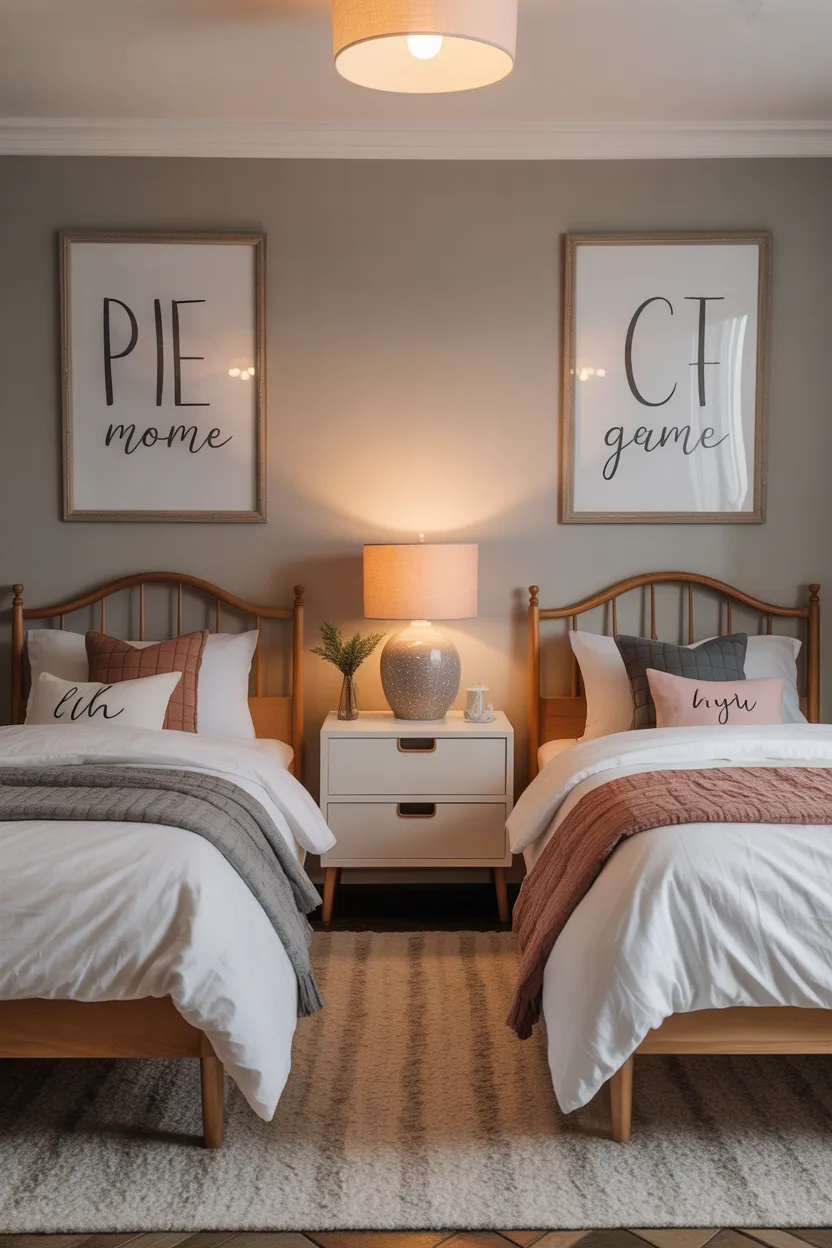
Personalized wall art gives each child a sense of ownership without disrupting the overall look of the room. You can hang name signs, initials, framed prints, or themed artwork above each bed to make each side feel special.
I love this because it gives personality without creating visual chaos. The room still looks coordinated, but each child sees something that feels like them. Personalized wall decor adds charm and helps both kids feel included in the design.
Also Read: 24 Black Furniture Living Room Ideas That Look Bold and Chic
15. Use Vertical Storage to Take Advantage of Wall Height
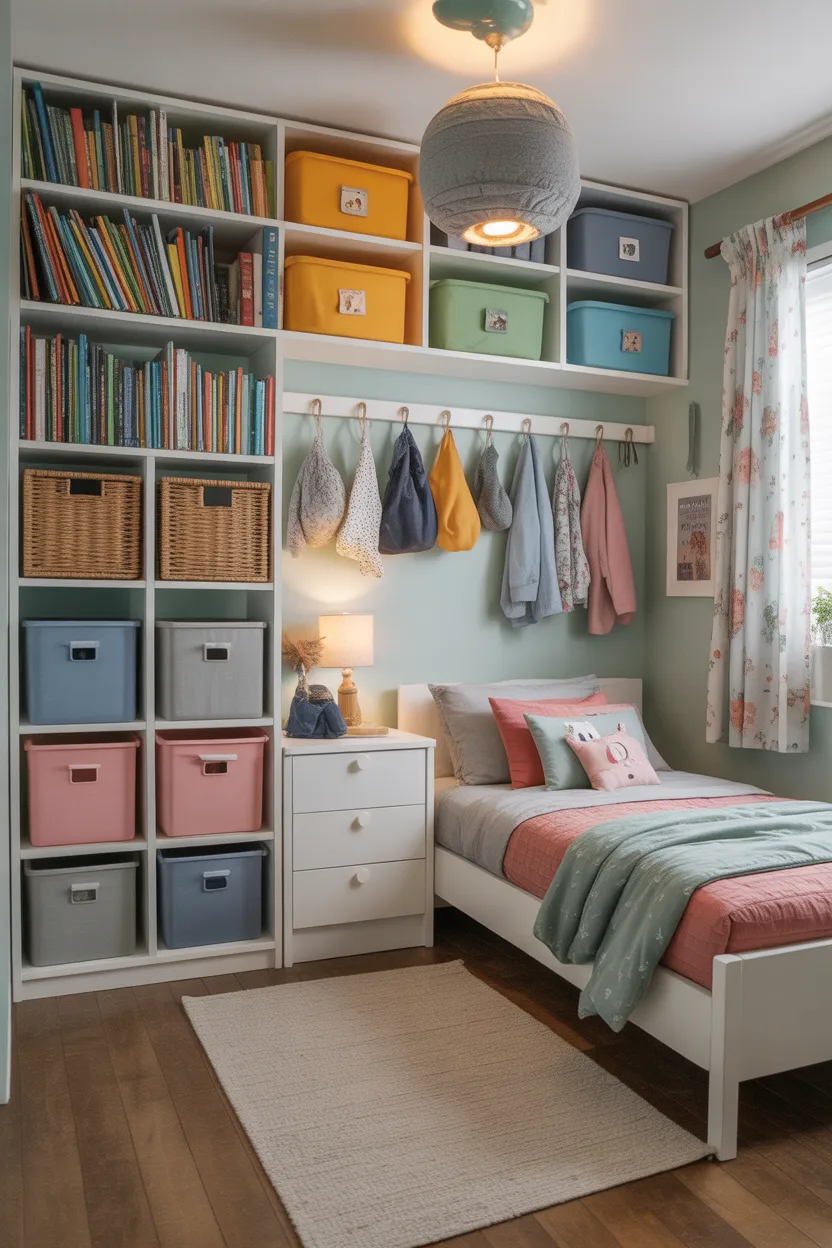
When floor space runs out, use the walls. Tall bookcases, hanging organizers, peg rails, and stacked bins help you store more without making the room feel stuffed. That is one of the smartest tricks in any shared bedroom setup.
Too many people ignore wall height and then wonder why the room feels cramped. The answer sits right there above eye level. Vertical storage helps you use every inch more efficiently while keeping the room open.
16. Build a Cozy Reading Corner for Quiet Time
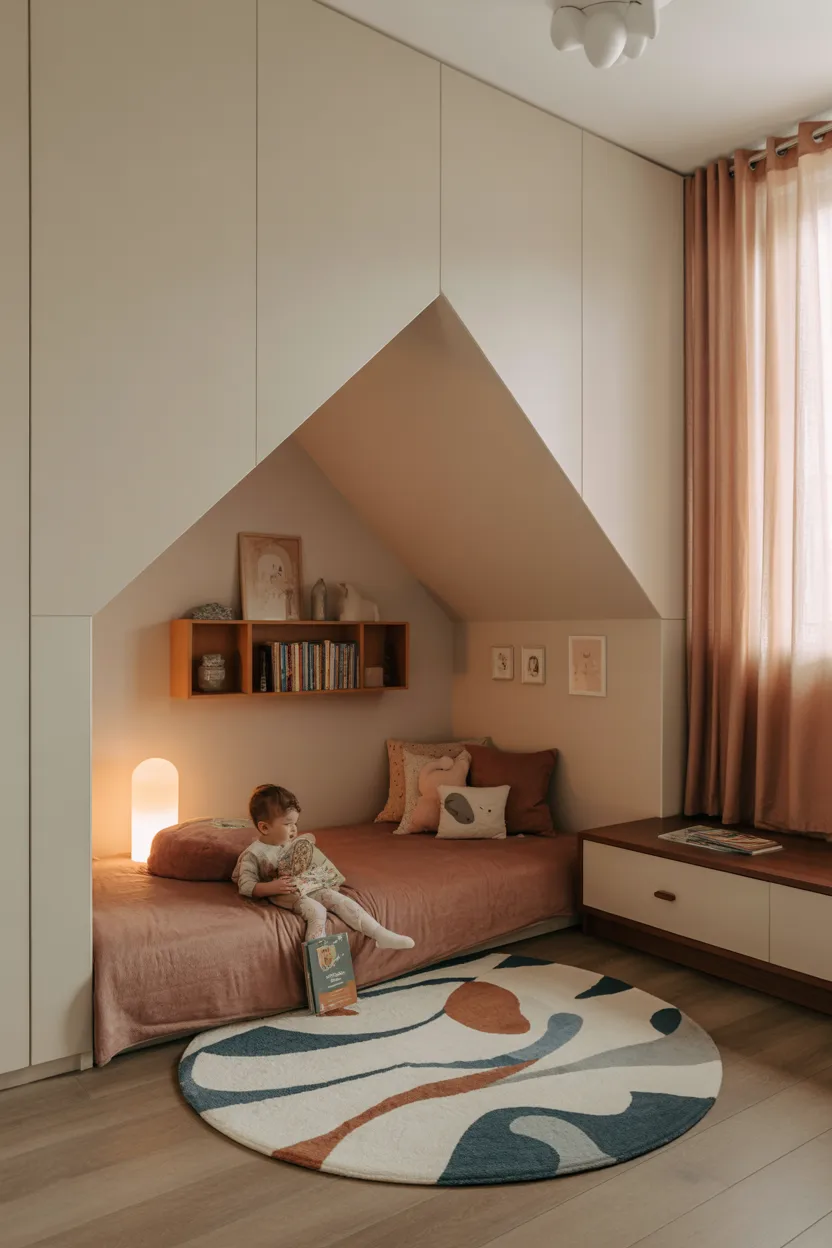
A reading nook can make a shared kids’ bedroom feel extra thoughtful. You do not need much. A small bench, floor cushions, bean bags, or a soft rug in a corner can create a comfortable place for books and quiet time.
I always think a room feels warmer when it offers more than just a place to sleep. Kids need spaces to relax too. A reading corner adds comfort, personality, and a quiet little escape inside a shared bedroom.
17. Use Matching Bedding with Small Personal Touches
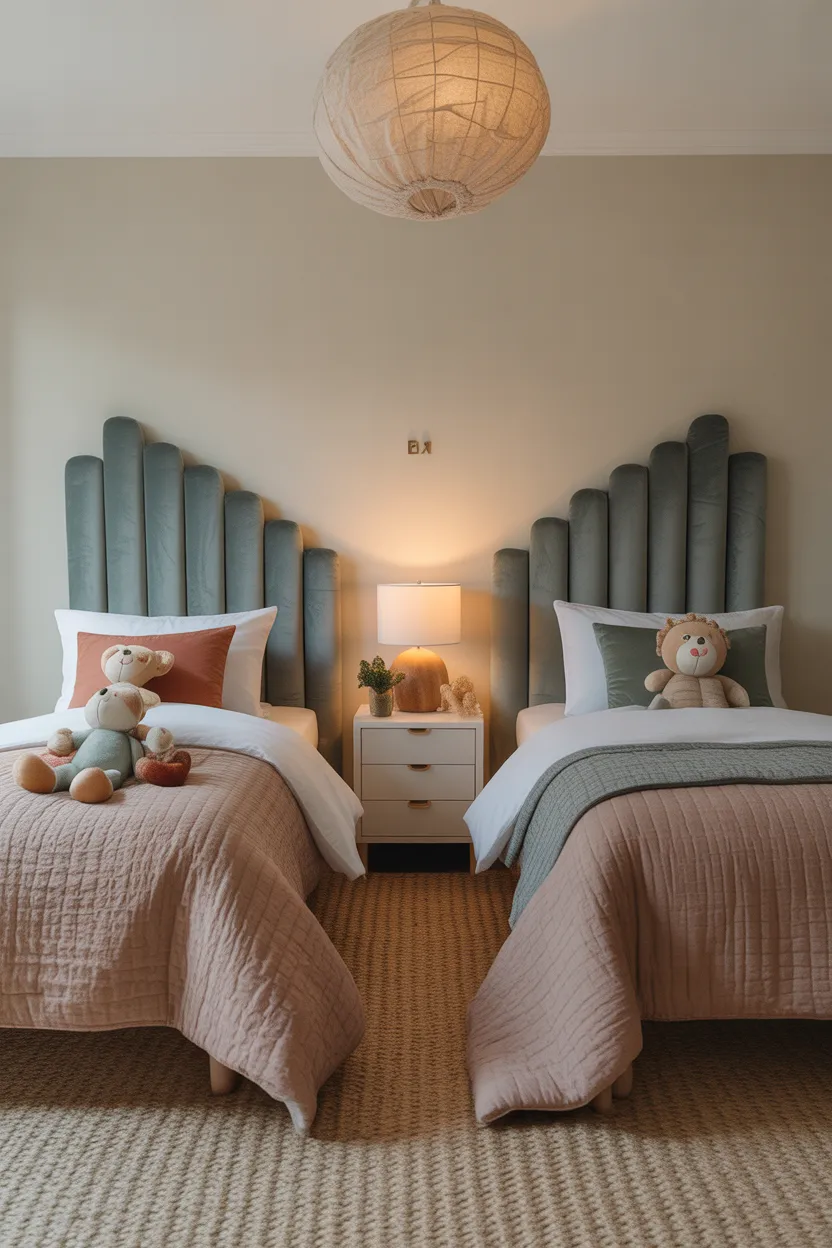
If you want the room to look polished but not boring, try matching bedding with different accents. Use the same bedding style or color family on both beds, then switch up the throw pillows, stuffed animals, or blankets to reflect each child’s taste.
This gives you the best of both worlds. The room stays coordinated, but the kids still get some individuality. Matching bedding with personalized accents keeps the room cohesive while allowing each child’s personality to show.
18. Work With Odd Corners Instead of Fighting Them
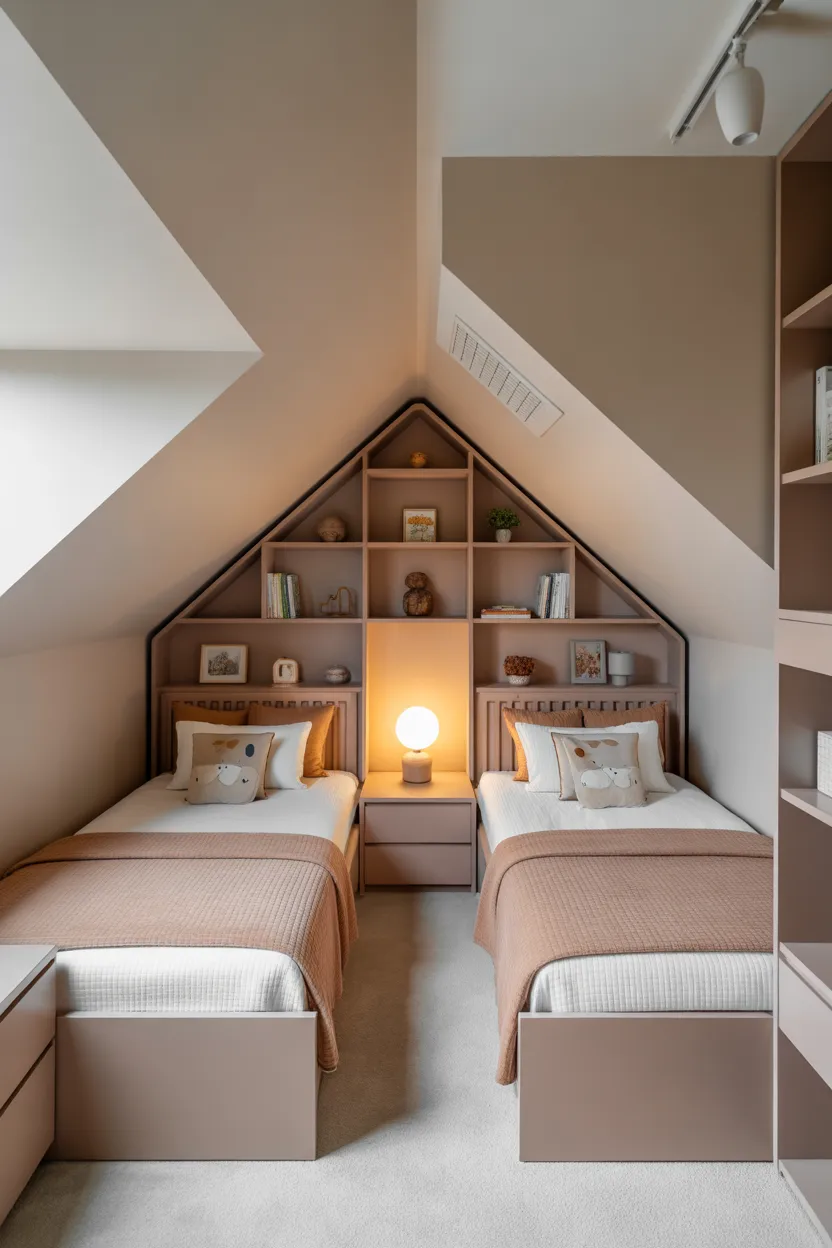
Some kids’ bedrooms come with awkward layouts, sloped ceilings, weird corners, or windows in inconvenient spots. Instead of forcing a perfect layout, work with the room’s quirks. Put a shelf in the nook, place the bed under the slope, or turn the corner into a reading area.
I actually think odd layouts can lead to smarter designs. The room feels more custom when you lean into its shape instead of pretending it does not exist. Using awkward spaces well makes a shared bedroom feel more creative and efficient.
Also Read: 23 Orange Couch Living Room Makeover Ideas That Pop
19. Choose Easy Clean Materials That Survive Real Life
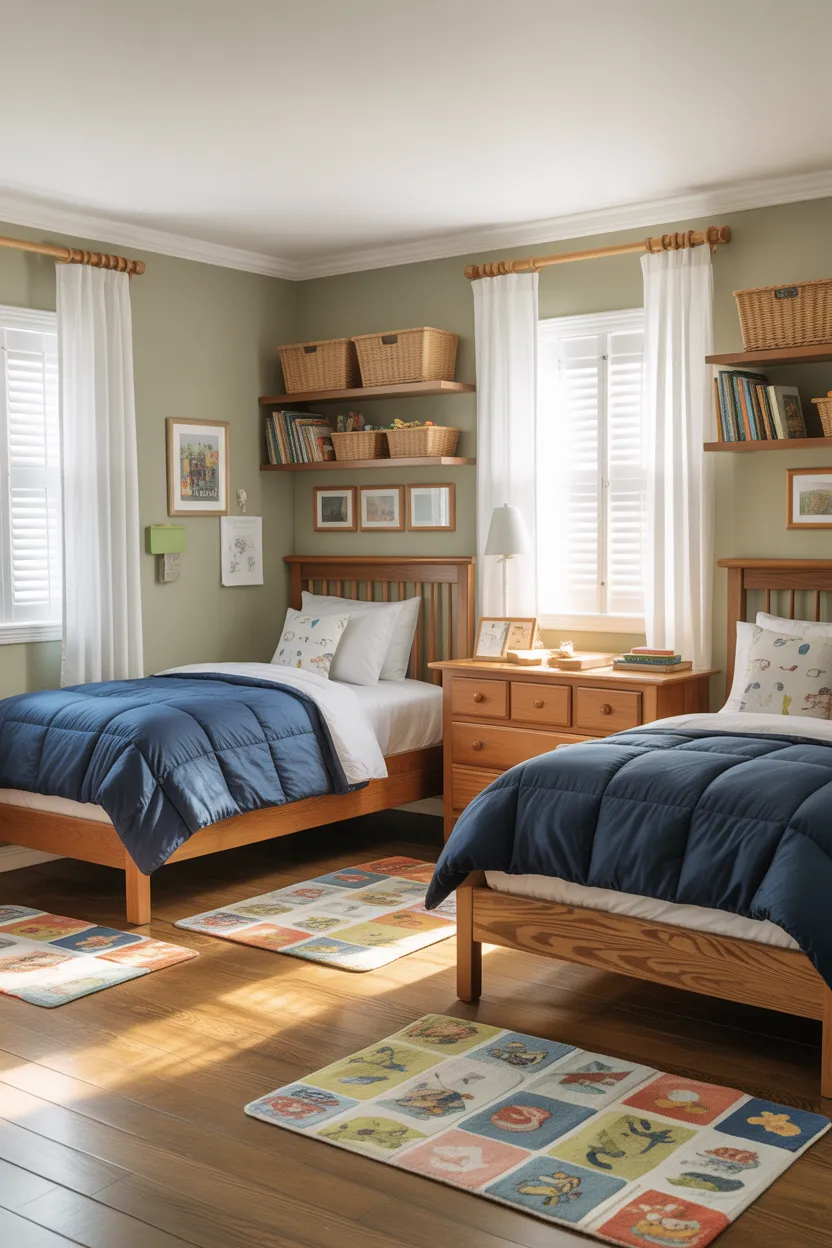
Kids are messy. Two kids in one room can make a shocking amount of mess with almost no effort at all. That is why shared bedroom furniture and fabrics should be easy to clean and durable enough for everyday use.
Look for washable rugs, wipeable finishes, sturdy wood furniture, and bedding that handles frequent washing. Pretty matters, but practical matters more. Durable materials help shared kids’ rooms stay nice looking without constant stress.
20. Rotate Toys Instead of Storing Everything at Once
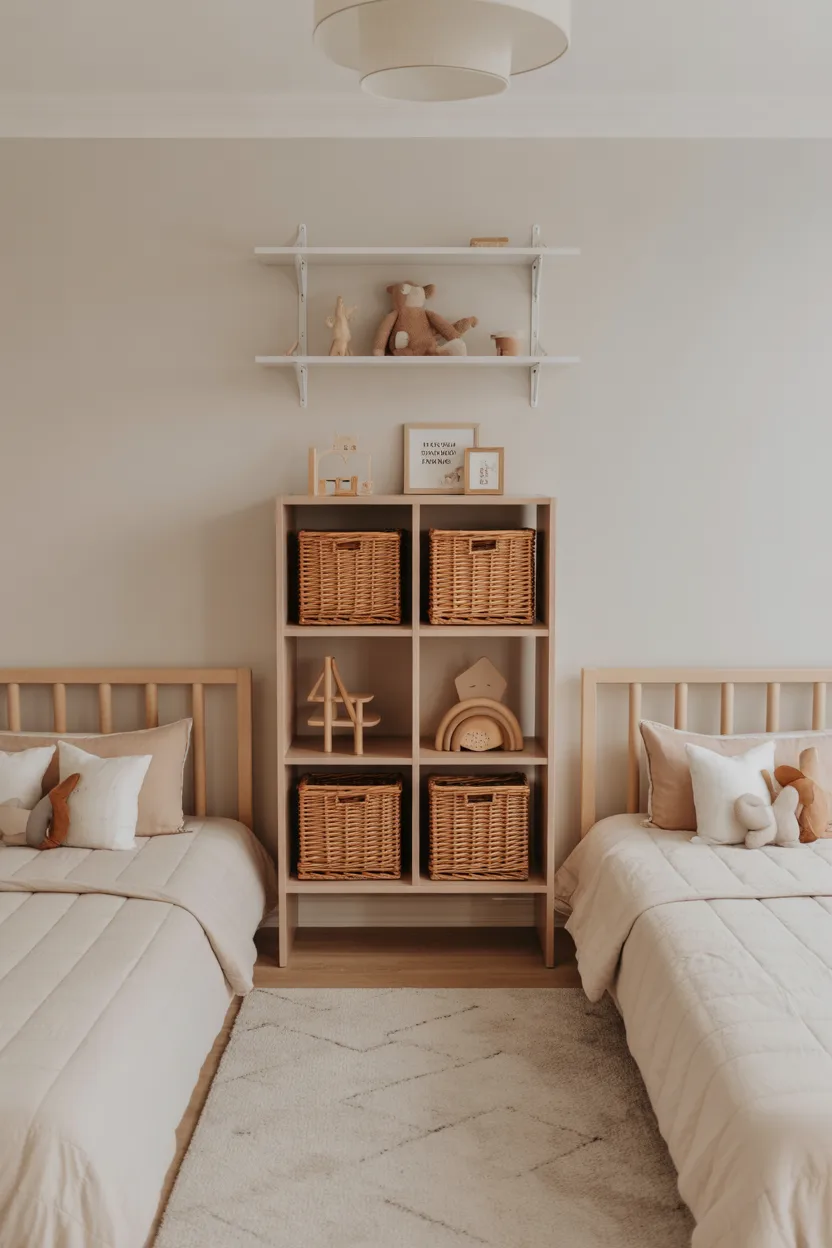
A shared bedroom does not need every single toy in it all the time. If the room feels overloaded, try rotating toys instead. Keep a smaller selection in the room and store the rest somewhere else, then swap them every few weeks.
This trick cuts down on clutter and helps the room feel calmer. It also keeps toys feeling fresh without buying more stuff, which feels pretty clever. Toy rotation keeps a shared bedroom more organized and easier to enjoy.
21. Add Hooks Anywhere You Can
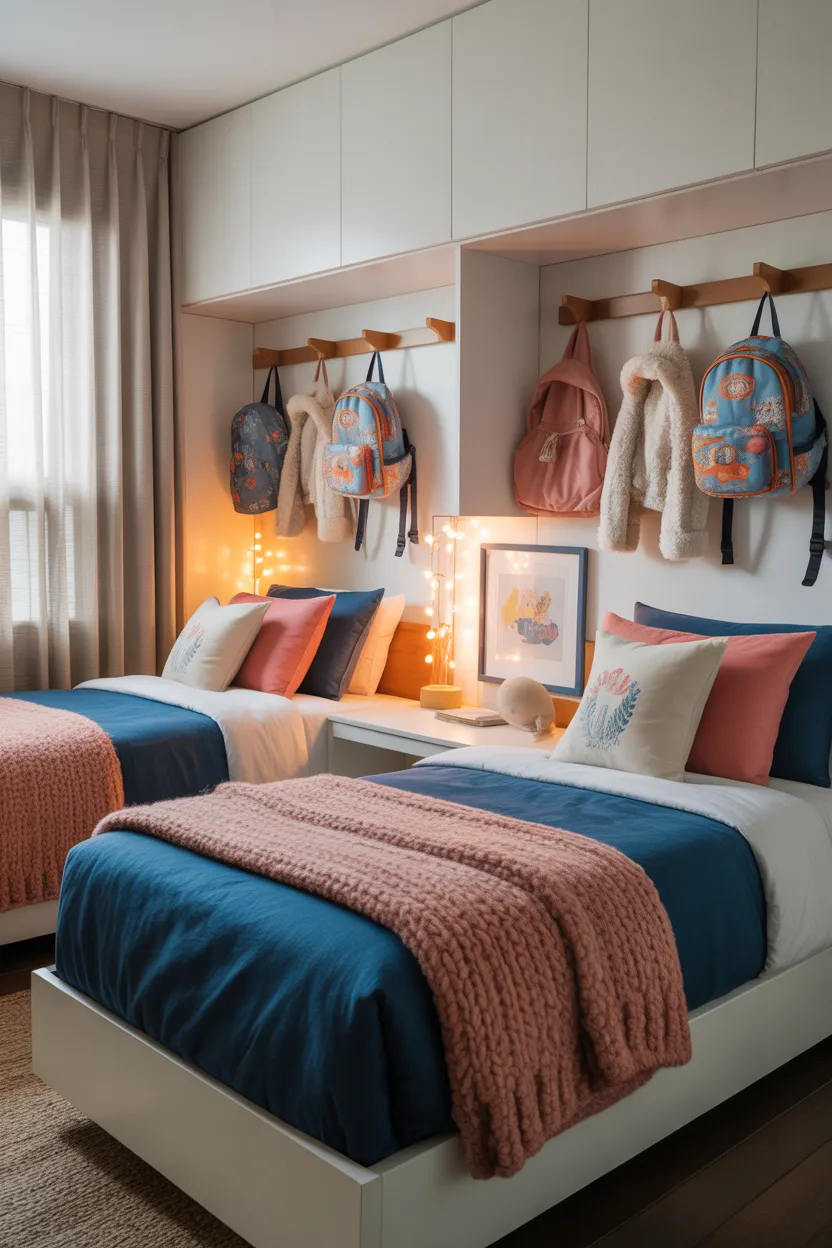
Hooks are one of the easiest ways to improve a shared kids’ room. Put them behind the door, beside each bed, near the closet, or along an empty wall. Kids can hang robes, backpacks, jackets, headphones, and dress up items without stuffing everything into drawers.
I love hooks because they make daily life easier. No folding. No digging. No mystery pile on the floor growing into its own ecosystem. Hooks add fast, practical storage that helps reduce mess in shared bedrooms.
22. Separate the Sleep Area from the Play Area
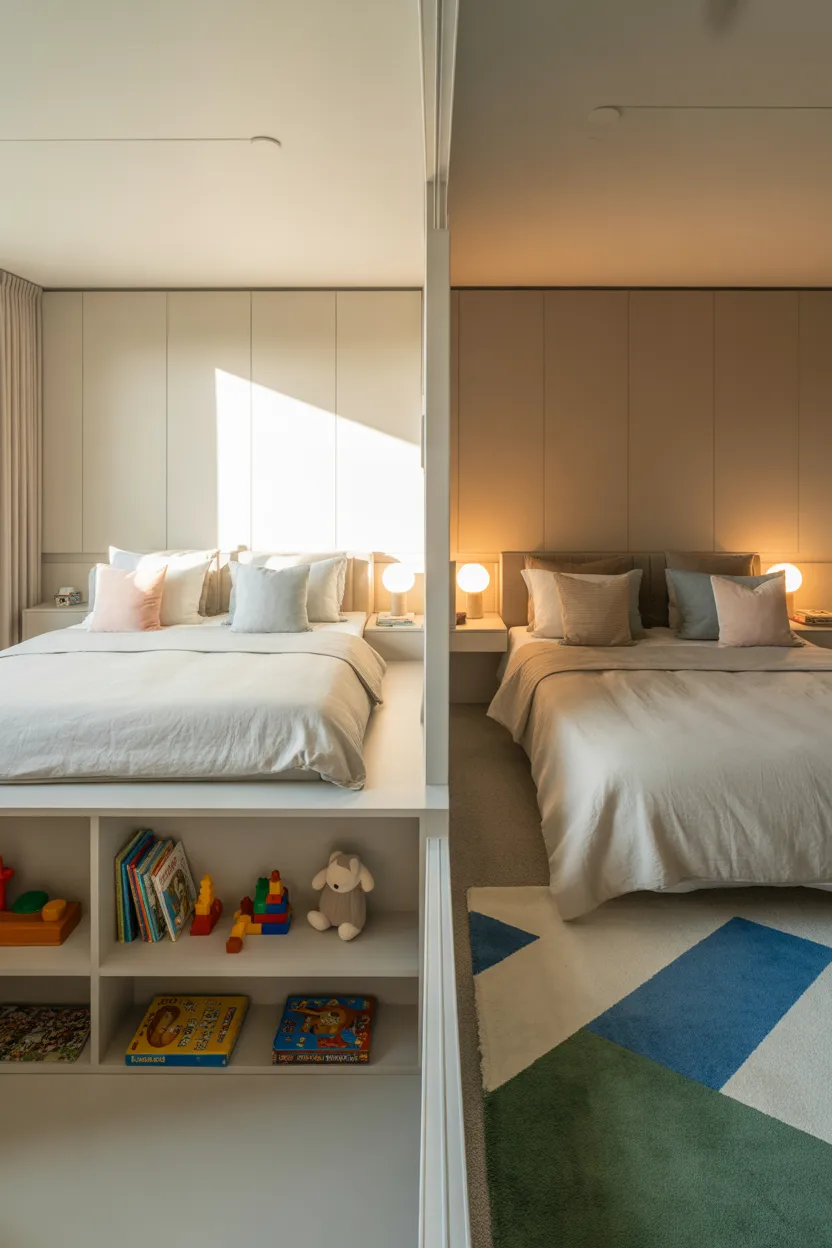
The best shared bedroom ideas for kids usually create a clear difference between sleeping space and play space. Keep the beds calm and simple, then place toys, art supplies, or activity bins in another part of the room if possible.
This setup helps the room feel more organized and helps bedtime go a little smoother too. When every part of the room screams playtime, winding down gets harder. A clear split between sleep and play improves routine, flow, and function.
23. Try Loft Beds for Older Kids Who Need More Function
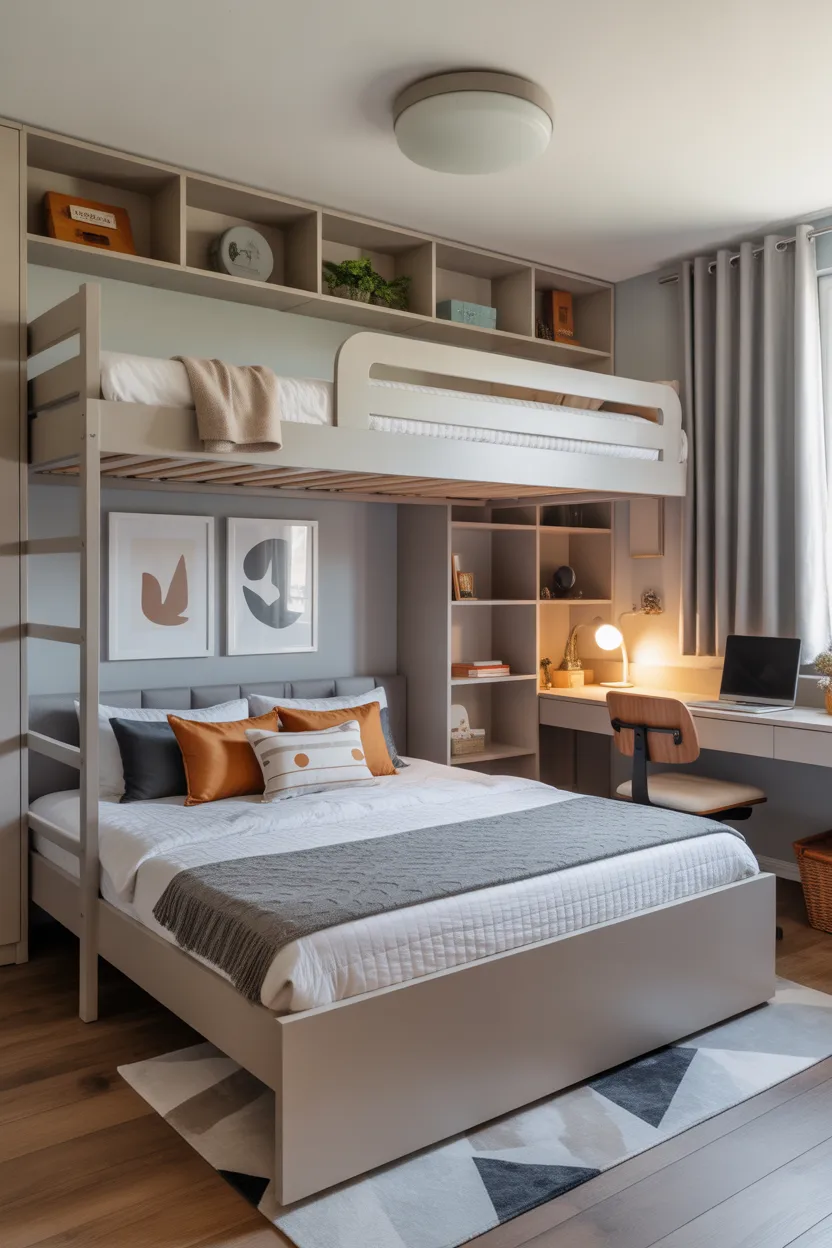
Loft beds work really well for older kids in a shared room because they open up the space underneath for something useful. You can place a desk, bean bag, shelves, or a dresser below, which makes the room work harder without feeling cramped.
This idea suits kids who need more study space or just want a room that feels a little more grown up. It also adds flexibility as they get older. Loft beds create extra usable space and make shared bedrooms feel more efficient.
24. Keep Decor Simple So the Room Does Not Feel Busy
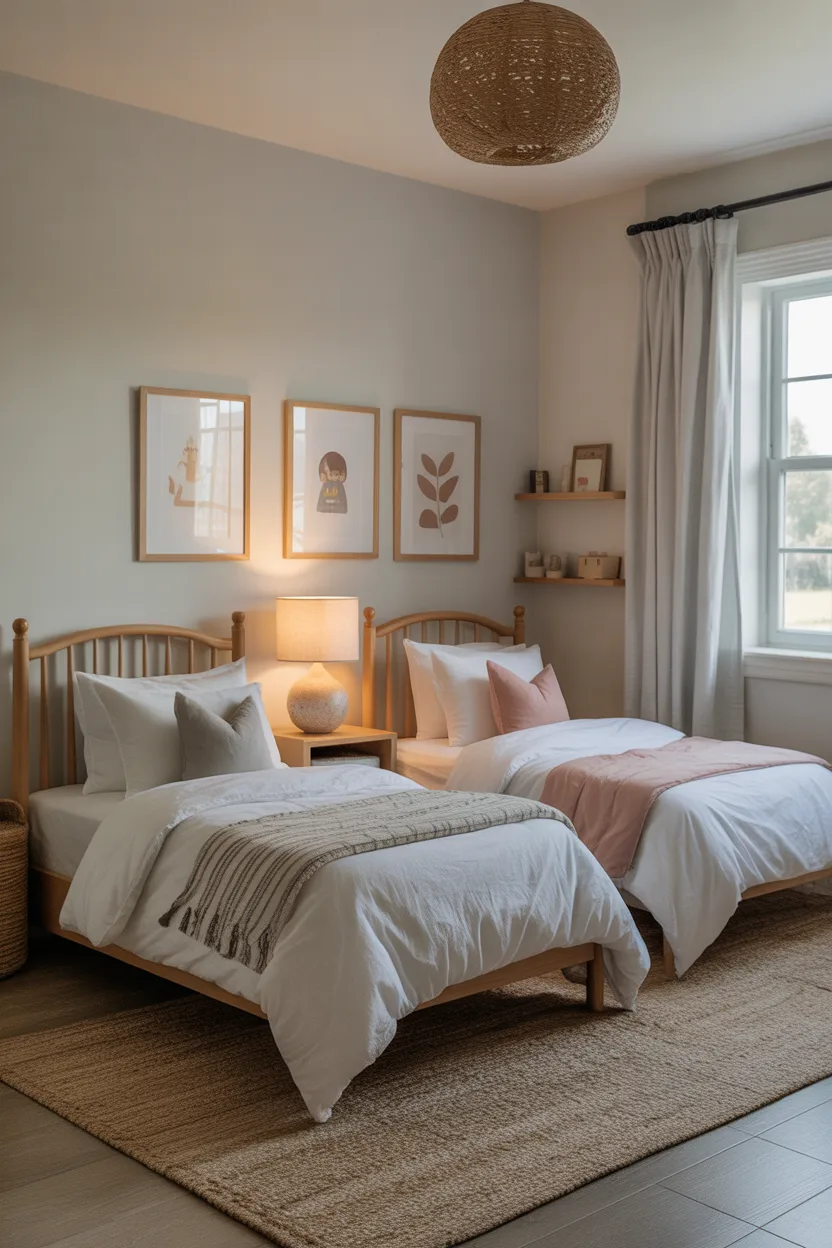
A shared bedroom already has a lot going on, so simple decor usually works better than layering too much. Choose a few strong design elements, then stop there. A cute rug, soft curtains, nice bedding, and a few framed prints can do a lot.
I always think restraint looks better in shared rooms. Kids already bring enough energy into the space. The walls do not need to join the performance. Simple decor helps shared bedrooms feel stylish, calm, and easier to live with.
25. Choose Flexible Pieces That Can Grow With Your Kids
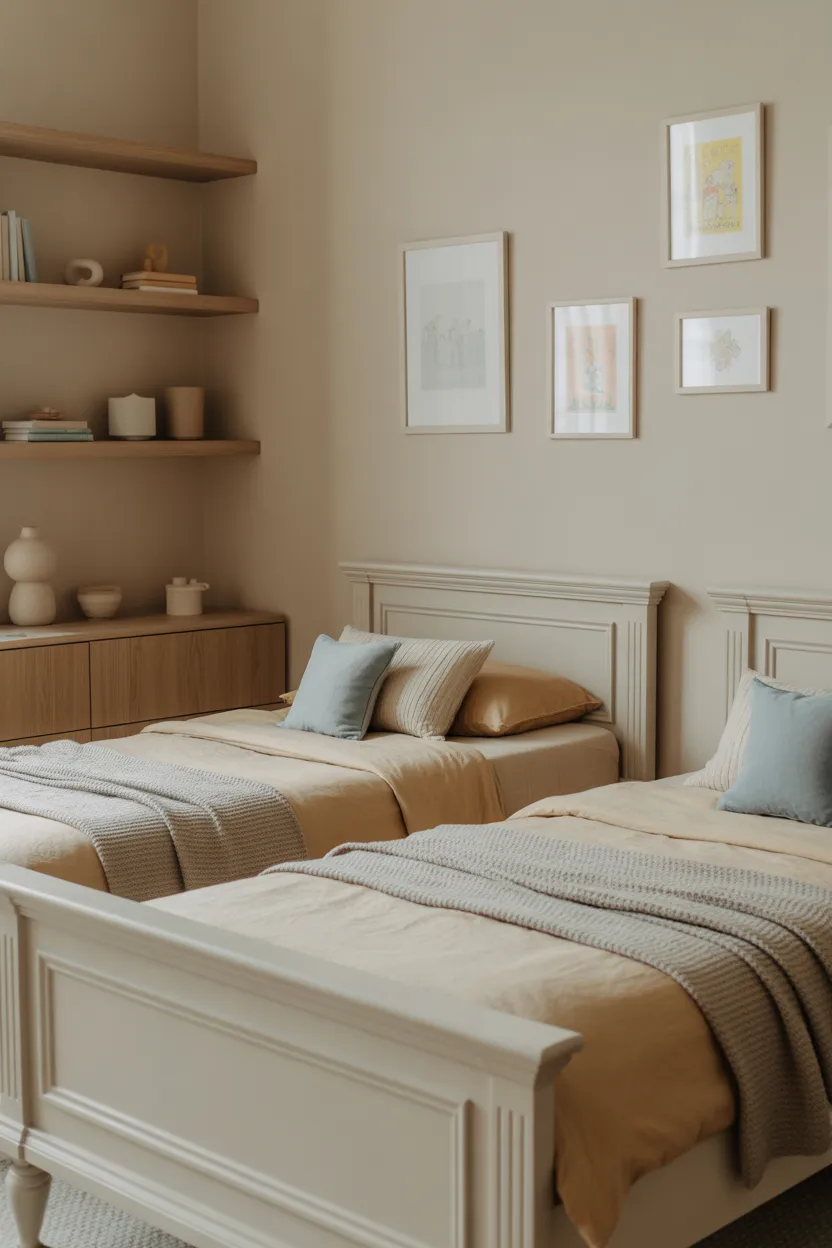
This might be the smartest idea in the whole article. Shared kids’ bedrooms work best when the furniture and layout can adapt over time. Use classic bed frames, neutral storage, and simple design choices that still work as your kids grow.
Tastes change fast. One month they love a certain theme, and the next month they act like they have always been too mature for it. Kids really keep you humble 🙂 Flexible furniture and timeless design choices help a shared bedroom stay useful for years.
Also Read: 22 Curtain Ideas Living Room That Look Rich and Cozy
Smart Tips That Make a Shared Kids’ Room Work Better
A pretty room matters, but daily function matters more. If the room looks amazing and still causes arguments every morning, the design did not actually win. So before you decorate, focus on the basics that make the space easier to use.
Keep these priorities in mind:
- enough storage for both kids
- equal access to furniture and light
- easy walking space
- clear personal zones
- durable materials
- flexible layouts that can change later
These details make the difference between a room that only looks good and a room that actually works. A clever shared bedroom should support real life, not just look cute in photos.
Common Shared Bedroom Mistakes You Should Avoid
It helps to know what not to do before you start rearranging furniture for the fifth time. Shared kids’ bedrooms usually run into trouble when the design focuses too much on style and not enough on fairness or function.
Watch out for these common mistakes:
- adding too much furniture
- giving one child the better side of the room
- forgetting storage from the start
- using dark colors in a small room
- overcrowding the walls with decor
- ignoring privacy as kids get older
I think the biggest mistake happens when people underestimate how much balance matters. Kids notice who got the better drawer, the bigger shelf, or the cooler corner. Fairness, storage, and smart planning matter just as much as style in a shared room.
Final Thoughts on Shared Bedroom Ideas for Kids
A shared bedroom can absolutely look clever, feel cozy, and work beautifully for everyday life. You just need the right mix of layout, storage, fairness, and personality. That is what makes the room feel thoughtful instead of cramped.
I honestly think shared bedrooms can end up looking even more charming than solo rooms because they push you to design with more intention. You think harder about what matters, what works, and what each child actually needs. And that usually leads to a better result.
So if you are putting together a shared kids’ room, start simple and stay practical. Focus on balance, comfort, smart storage, and flexible design, then add the fun details from there. Do that, and you will end up with a space that looks good, feels fair, and handles real life without falling apart by Tuesday.