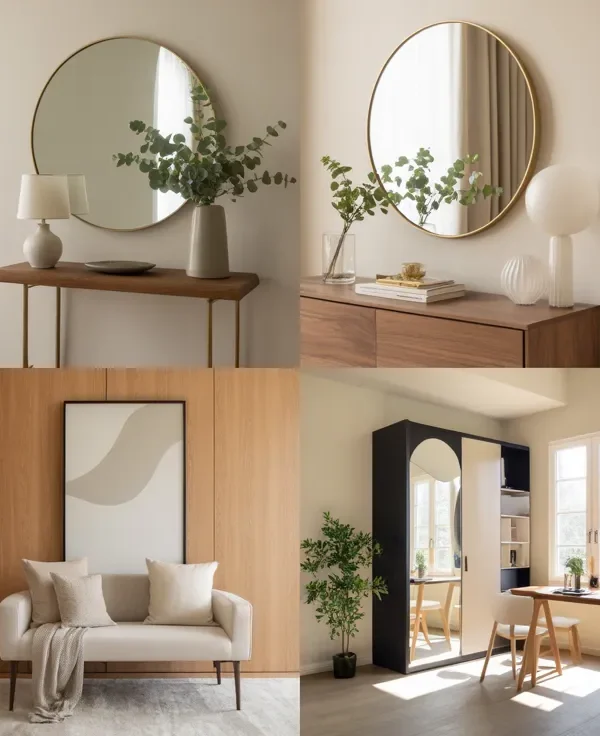

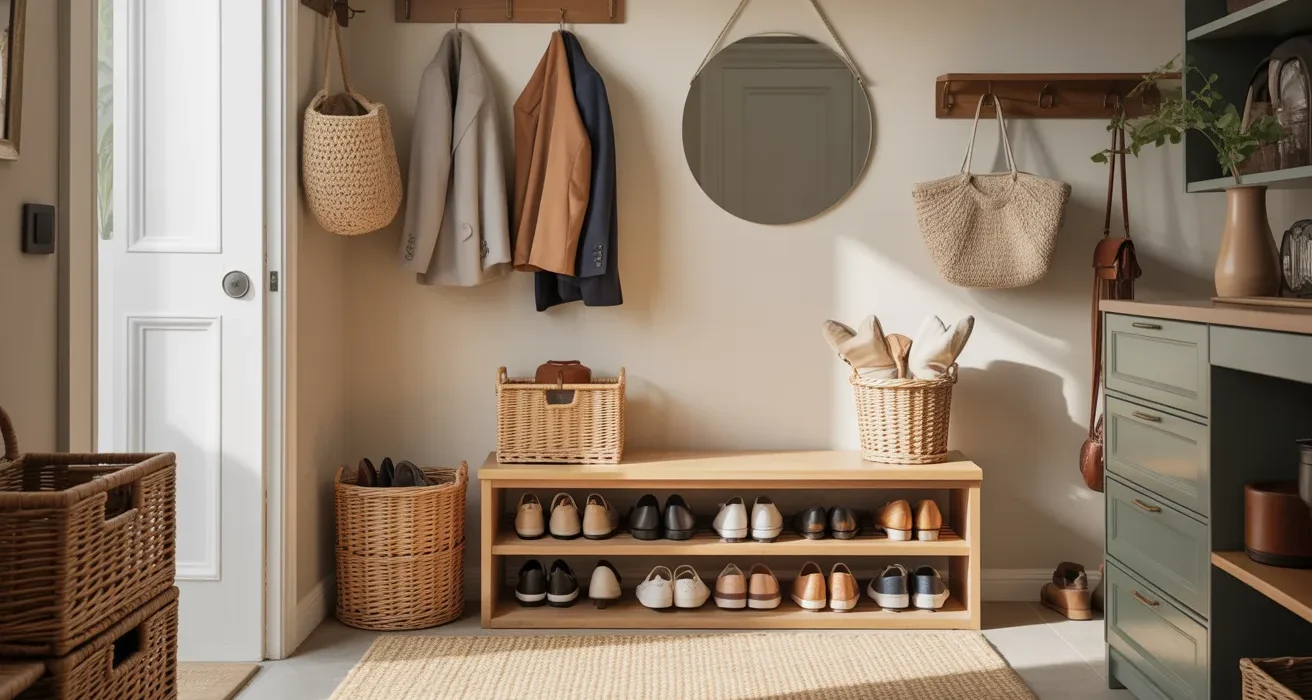
Shoes love drama. You leave one pair by the door, then somehow five more join the party, and suddenly your entryway looks like a footwear crime scene.
I know this struggle very well. I’ve lived with narrow hallways, tiny apartment entrances, and a front door area so small that one pair of boots felt like a full renovation project. A good shoe rack can make your entryway look neat, calm, and actually usable , without asking you to become a perfect person overnight.
1. Slim Two-Tier Shoe Rack for Tight Entryways
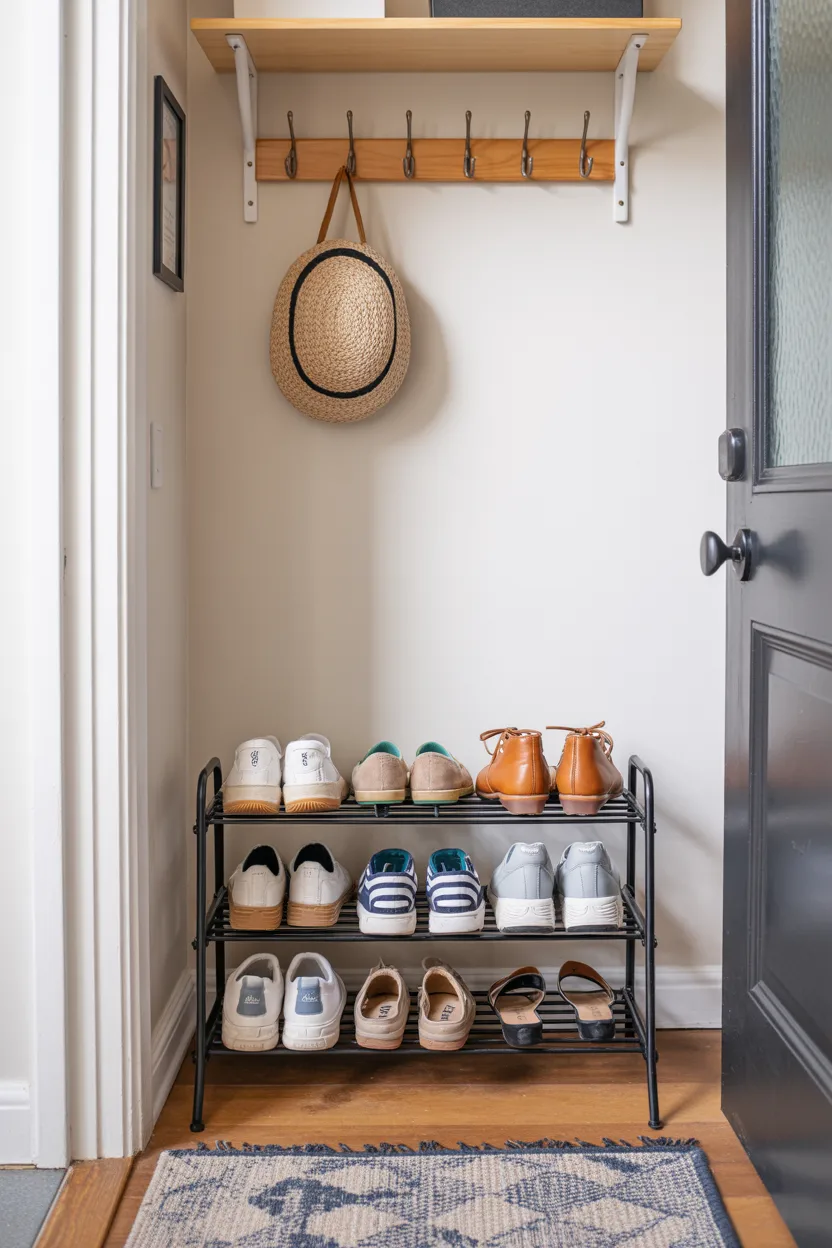
A slim two-tier shoe rack works beautifully in small entryways. It gives shoes a clear place to land without stealing half your floor. If your entryway feels more like a hallway with ambition, this idea makes a lot of sense.
I like this option for apartments because it stays simple. You can tuck it beside a door, under coat hooks, or next to a narrow console table. A slim shoe rack keeps everyday shoes visible, tidy, and easy to grab.
This rack works best for:
- Sneakers
- Flats
- Sandals
- Loafers
- Kids’ shoes
- Low ankle boots
Choose metal if you want durability. Choose bamboo if you want a warmer look. Either way, avoid racks with weak shelves, because saggy shoe storage looks sad fast.
Also Read: 25 Shared Bedroom Ideas for Kids That Look So Clever
2. Bamboo Shoe Rack That Adds Warmth
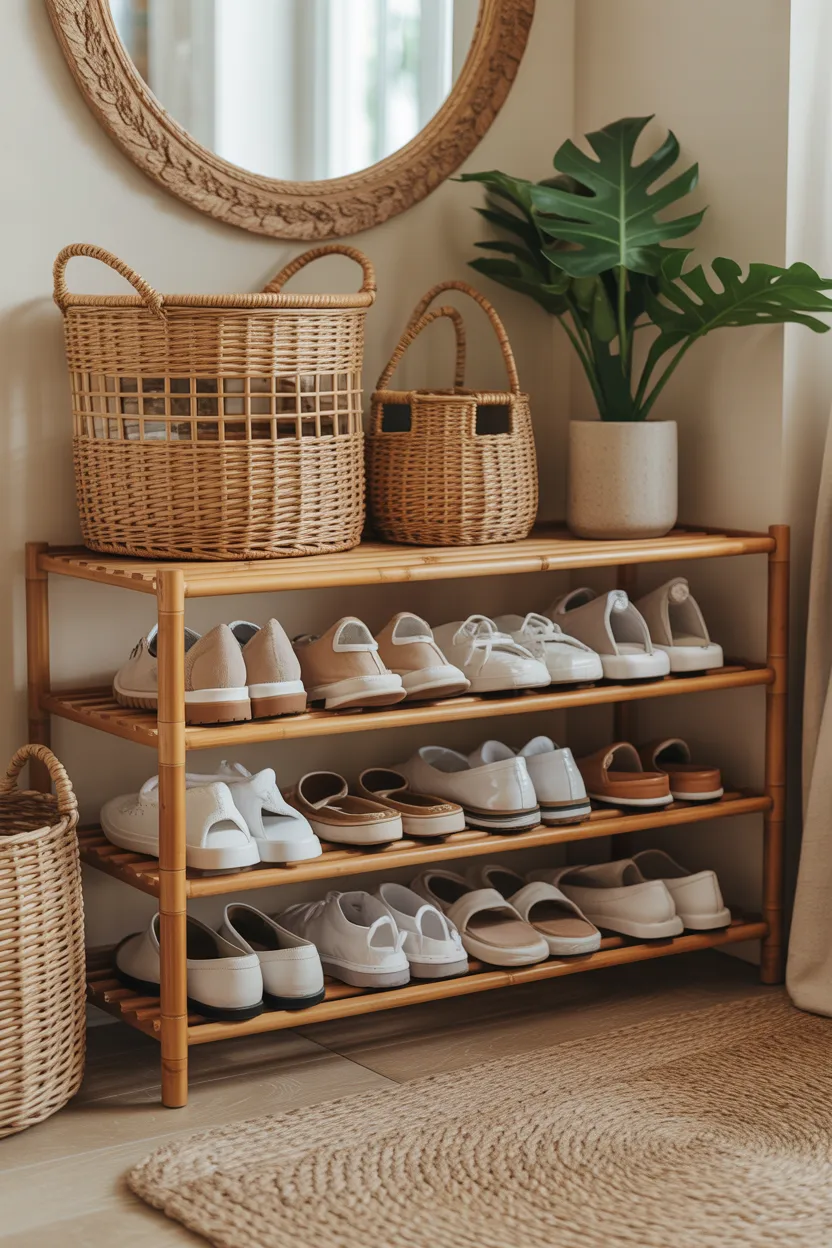
A bamboo shoe rack gives your entryway a softer, cleaner look than basic plastic or metal. It works especially well with natural decor, woven baskets, light wood furniture, and houseplants. Basically, bamboo says, “I organize shoes, but I also have taste.”
I used a bamboo rack in a rental once, and it made the whole entry feel more intentional. The shoes still looked like shoes, obviously, but the setup felt calmer. Bamboo adds warmth without making the entryway feel heavy.
This idea suits small and medium entryways. It also works well near a front door because bamboo handles light daily use nicely. Just wipe wet shoes before placing them on the rack, because no material enjoys puddles.
If you want a neat entryway shoe rack with a relaxed, homey feel, bamboo deserves a spot on your shortlist.
3. Shoe Storage Bench for Sitting and Stashing
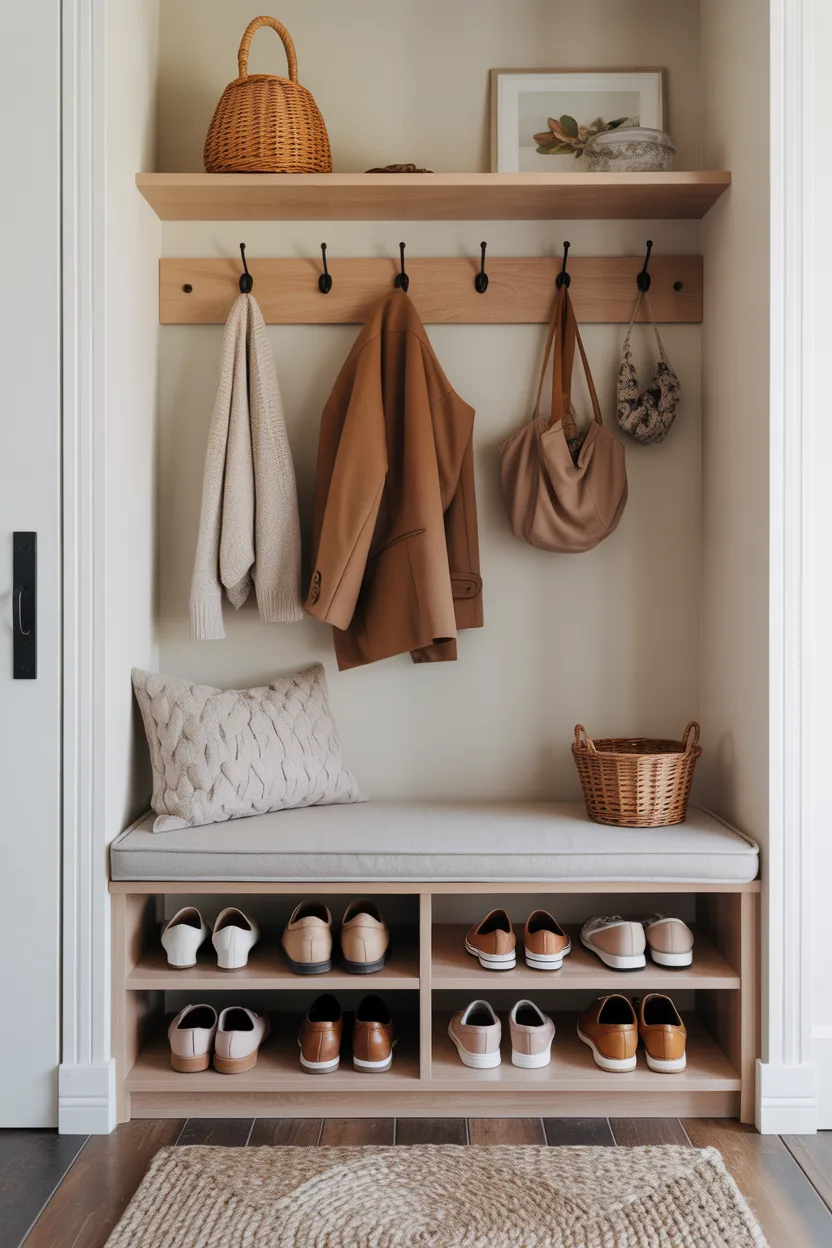
A shoe storage bench gives you seating and shoe storage in one piece. You sit, tie your shoes, and tuck the pair underneath when you come back home. Honestly, that feels like a tiny luxury when you usually hop around on one foot like a confused flamingo.
A shoe storage bench works especially well for families , older adults, and anyone who wears boots often. It also helps guests because people instinctively understand where to sit and where to place shoes.
Look for these features:
- A sturdy seat
- Two or more shelves underneath
- Enough depth for larger shoes
- A washable cushion if you want comfort
- Open storage for easy daily access
Compared with a basic rack, a bench makes your entryway feel more finished. It turns a messy shoe zone into a real drop zone. Who doesn’t want the front door area to look like someone planned it on purpose?
Also Read: 20 White Kitchen Cabinet Ideas That Feel Bright and Timeless
4. Closed Shoe Cabinet for a Cleaner Look
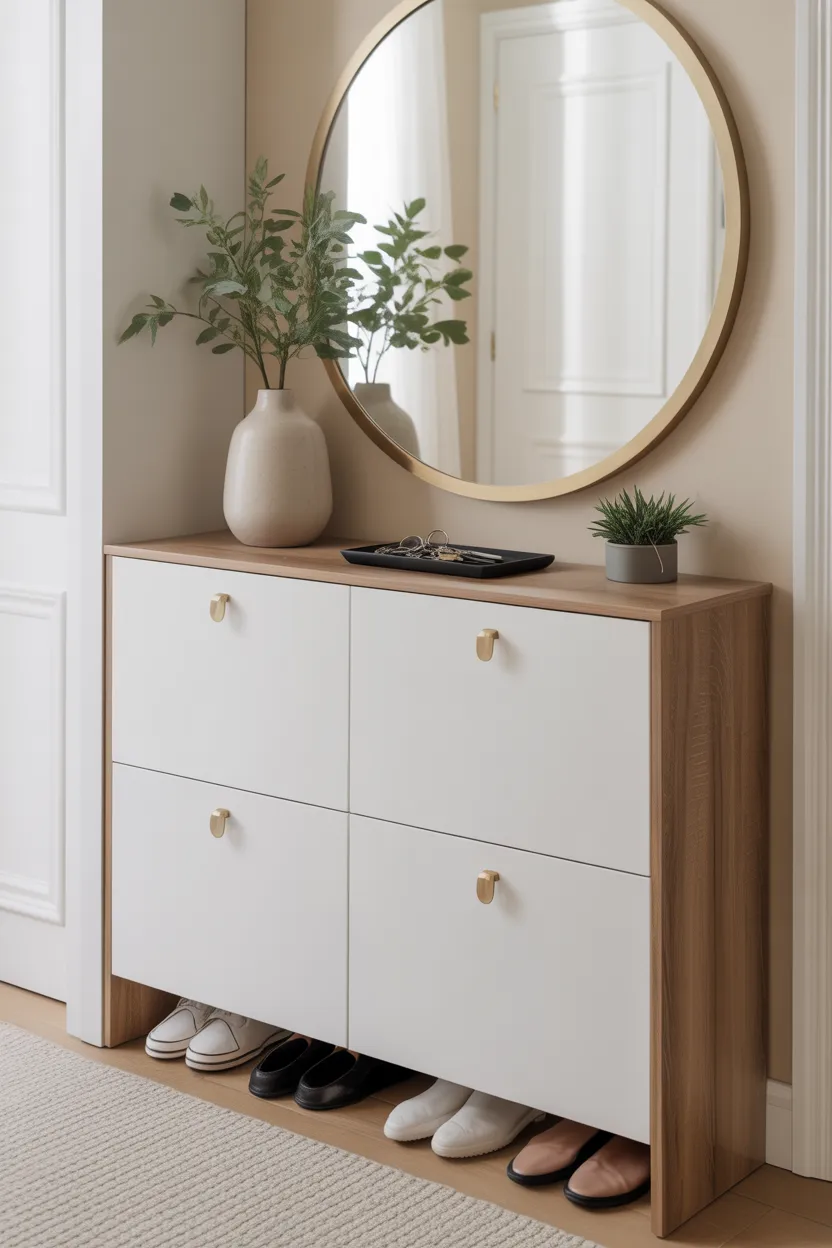
A closed shoe cabinet hides shoes behind doors, which instantly makes an entryway feel neater. If open shelves make your brain itch, this idea can save your sanity. You still store the same shoes, but your eyes no longer see every sneaker, sandal, and boot fighting for attention.
Closed shoe storage works best when you want a tidy, furniture-like look. It suits entryways that open straight into a living room, hallway, or dining space. Guests see clean cabinet doors instead of your entire family’s footwear history.
Choose a cabinet with airflow if possible. Shoes need ventilation, especially after rainy days or long walks. Nobody wants to open a cabinet and meet the scent of gym class from 2007.
This idea costs more than a basic rack, but it gives a polished result. If you care about visual calm, the upgrade makes sense.
5. Tilt-Out Shoe Cabinet for Narrow Hallways
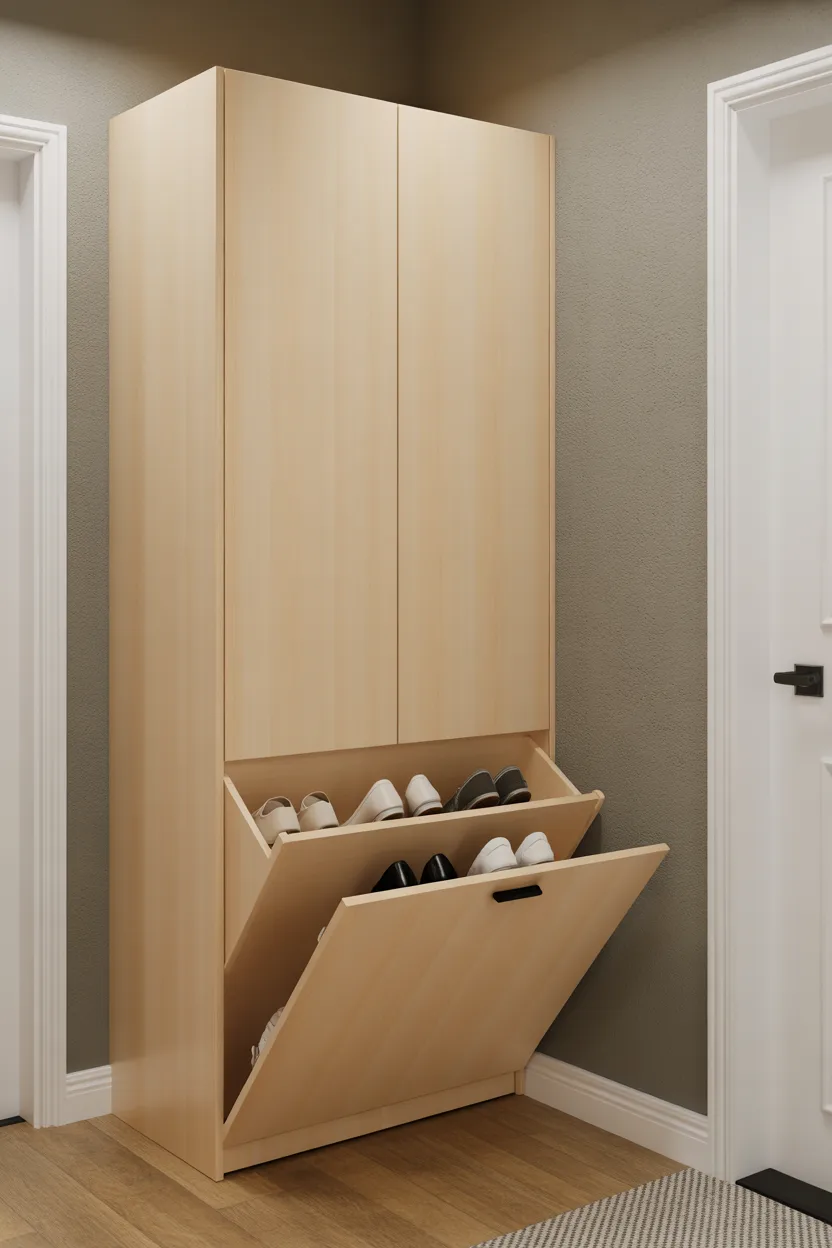
A tilt-out shoe cabinet works like a clever little secret. The front panels tip forward, and shoes sit inside at an angle. You get hidden shoe storage without needing a deep cabinet.
This design works perfectly in narrow hallways and small entryways. It hugs the wall and keeps shoes out of sight. If your entryway has width problems, a tilt-out cabinet solves more than one issue at once.
Before buying one, measure your shoes. Some tilt-out cabinets handle sneakers and flats well but struggle with chunky boots or high-tops. Nobody wants to buy a cabinet that only fits shoes from a dollhouse.
Compared with a regular closed cabinet, this option saves floor space. It also looks sleek, which helps if your front door opens into a visible part of your home.
Also Read: 22 Bright Bedroom Color Ideas for Small Rooms That Open Up
6. Vertical Shoe Tower for Maximum Storage
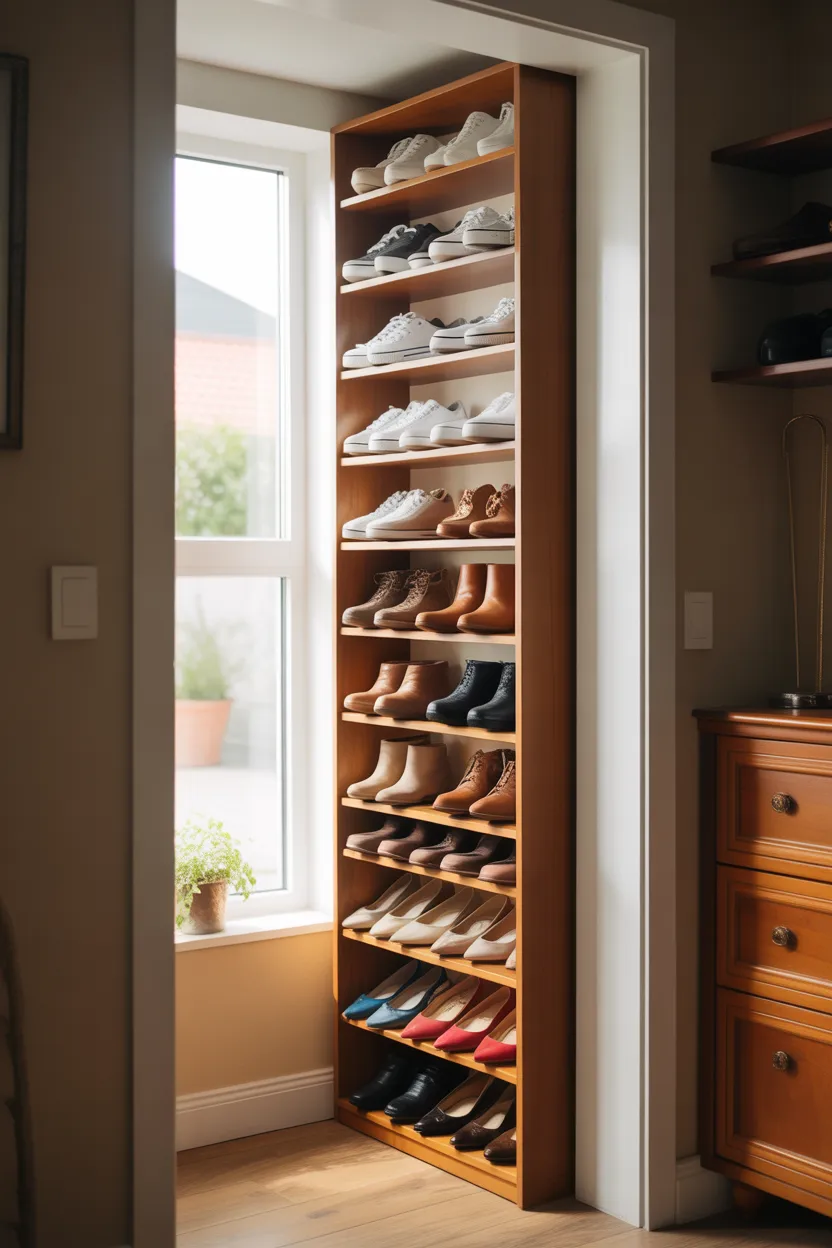
A vertical shoe tower uses height instead of floor space. That makes it perfect for small homes, apartments, and corners that usually collect random bags. Why waste wall space when it can hold shoes?
A vertical shoe rack helps people with larger shoe collections. You can see each pair quickly, which makes mornings easier. No more digging through a pile while pretending you “definitely saw those black sneakers yesterday.”
Look for adjustable shelves if your shoes vary in size. Flat sandals need little height, while boots and high-tops need more room. Adjustable shelves let you change the layout whenever your collection changes.
This idea works best when you have a clear wall or corner. Secure tall racks if they feel wobbly, especially in homes with kids or pets.
7. Wall Shelves That Keep Shoes Off the Floor
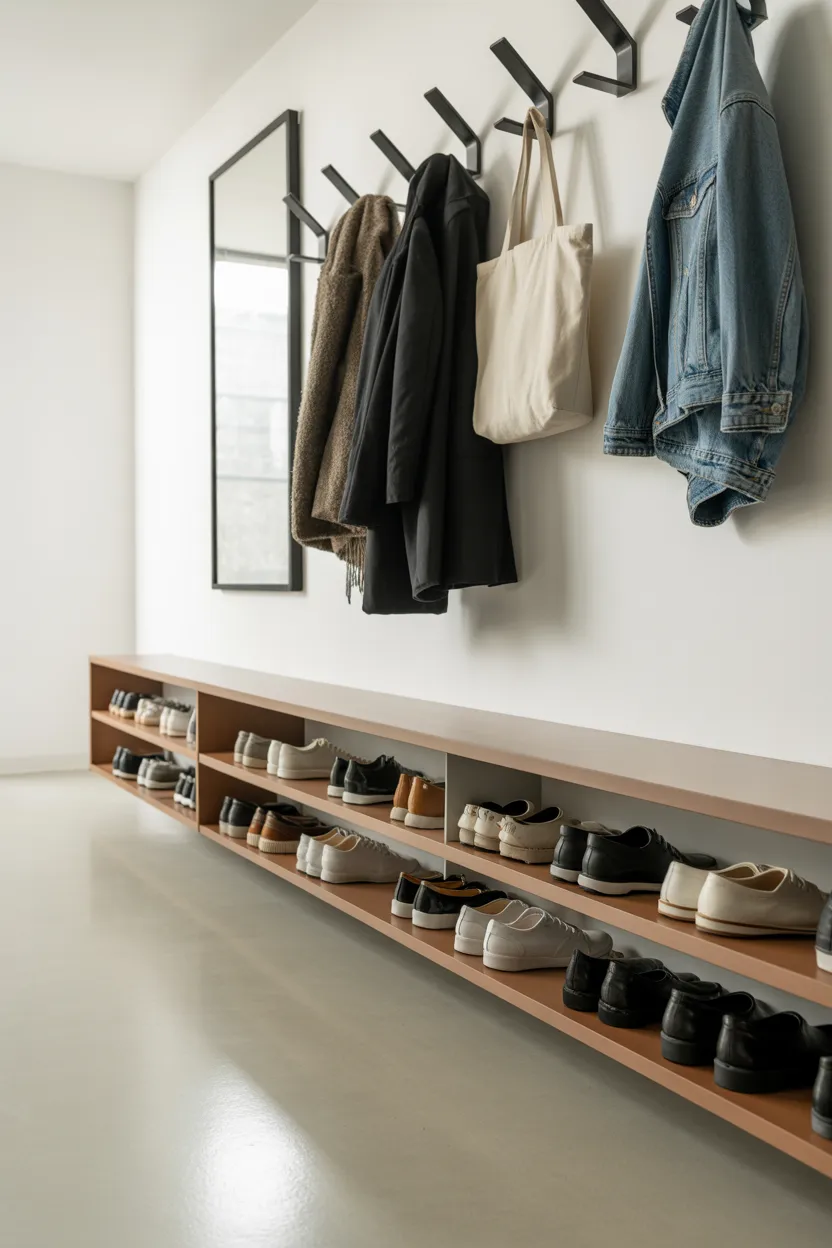
Wall shelves keep shoes off the floor and make cleaning easier. You mount shelves low on the wall and use them like open shoe storage. The result looks simple, light, and modern.
Wall-mounted shoe shelves work well in tight entryways because they free up floor space. You can sweep underneath them without moving a rack every time. Small convenience? Yes. Surprisingly satisfying? Also yes.
Use sturdy shelves and proper anchors. Shoes may not seem heavy, but several pairs add weight quickly. If you rent, check your lease before mounting anything serious.
This setup looks great under wall hooks, a mirror, or a small shelf for keys. It creates a neat vertical entryway zone where everything has a place.
Also Read: 21 Teen Girl Bedroom Color Ideas That Feel Cute and Stylish
8. Floating Shoe Ledge for Minimalists
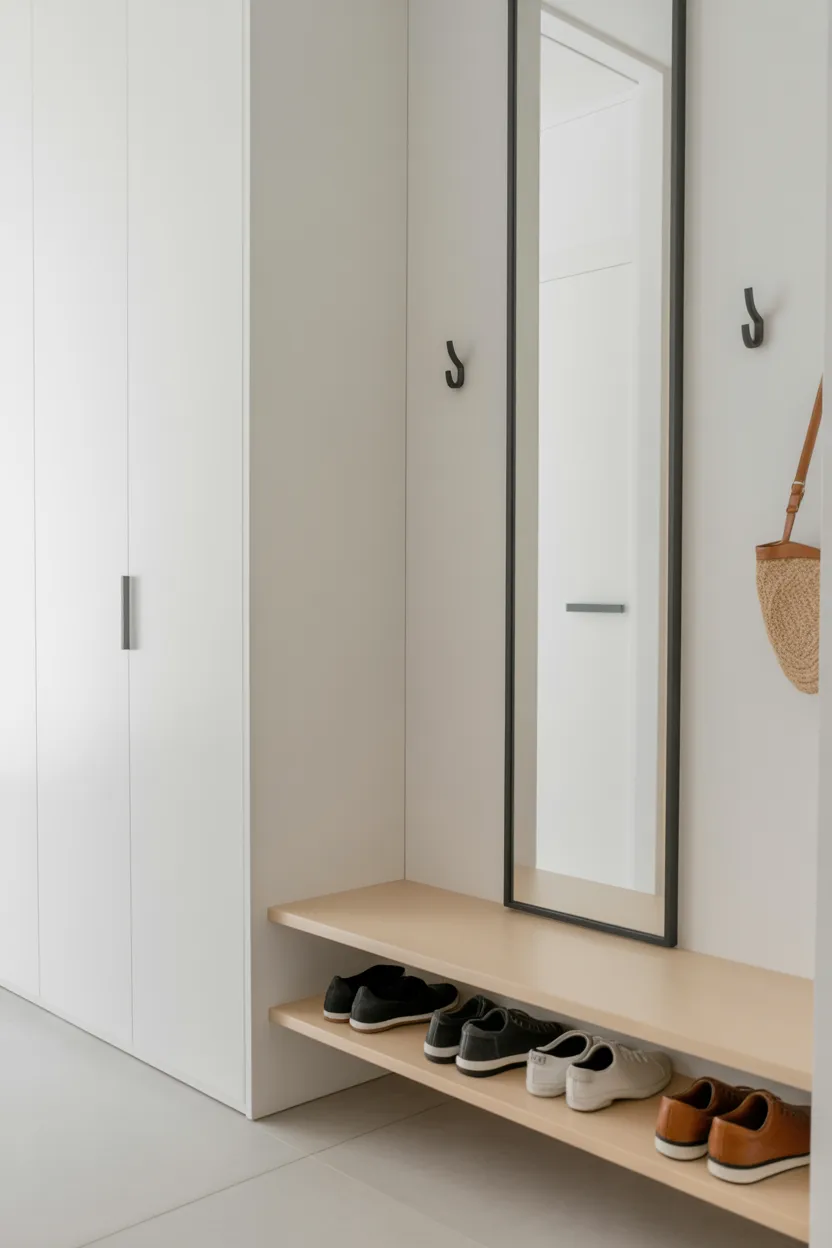
A floating shoe ledge gives you a clean, low-profile place for daily shoes. It works best when you only keep a few pairs by the door. If your entryway shoe pile has its own ecosystem, one ledge will not perform miracles.
This idea suits minimalist entryways and narrow spaces. The ledge keeps shoes lined up neatly without adding bulky furniture. It also looks intentional, which helps even when the shoes themselves look well-loved.
Choose a ledge with a small lip or rail. That little detail keeps shoes from sliding off when someone bumps them. You know someone will bump them.
A floating ledge pairs nicely with a peg rail, slim mirror, or wall hooks. Keep only your most-used pairs there, and move the rest to a closet.
9. Over-the-Door Shoe Organizer for Zero Floor Space
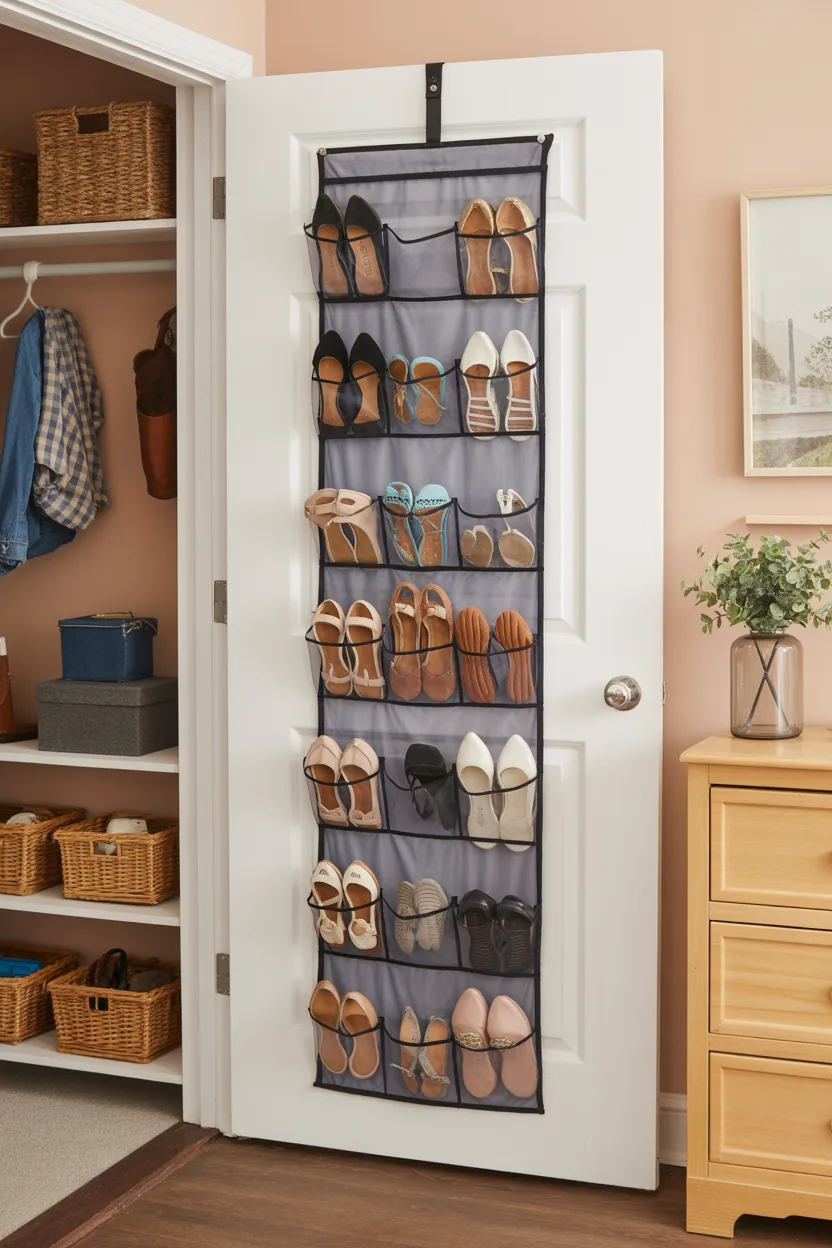
An over-the-door shoe organizer saves the day when you have no floor space at all. Hang it on an entry closet door, fill the pockets, and enjoy your newly visible floor. Magic? No. Practical? Very.
This shoe storage idea works especially well for small apartments and tiny entryways. You use the back of a door instead of adding furniture. That helps when every inch matters.
Use the pockets for more than shoes:
- Flats
- Sandals
- Kids’ shoes
- Gloves
- Dog leashes
- Umbrellas
- Shoe polish
- Reusable shopping bags
Clear pockets help you see everything quickly. Fabric pockets look softer and hide clutter better. Choose based on whether you value speed or visual calm more.
10. Under-Console Shoe Rack for a Polished Entry
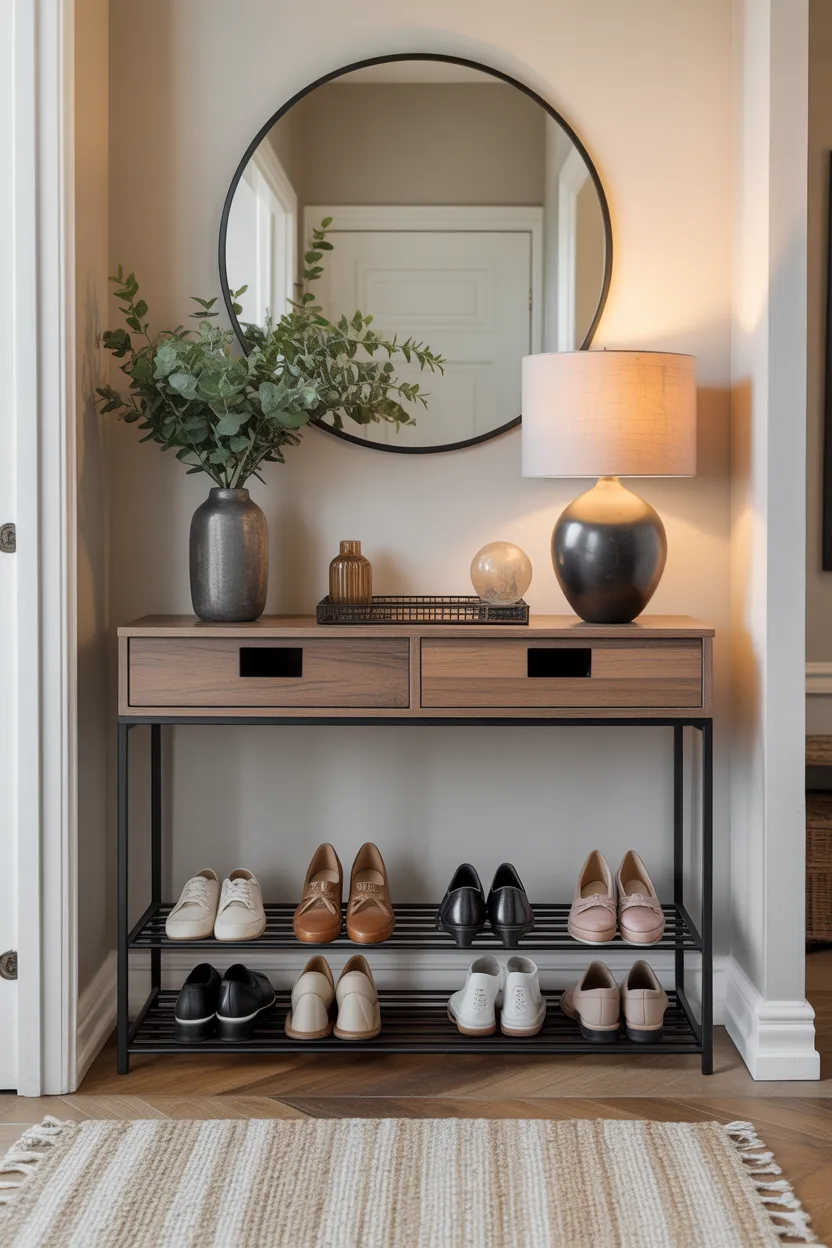
If you already have a console table near the door, use the space underneath. A low shoe rack or tray can slide below it and keep shoes organized without adding another big piece of furniture.
Under-console shoe storage looks polished because the table frames the area. Add a mirror above, a bowl for keys, and maybe a small lamp, and suddenly your entryway looks styled instead of chaotic.
This idea works best with low-profile shoes and daily pairs. Don’t cram tall boots underneath unless the table gives you enough height. Crowded storage always looks messy, even when you technically “organized” it.
I like this setup because it feels easy. You walk in, kick off shoes, slide them under the table, and move on with your life.
Also Read: 24 Black Furniture Living Room Ideas That Look Bold and Chic
11. Rolling Shoe Cart for Flexible Storage
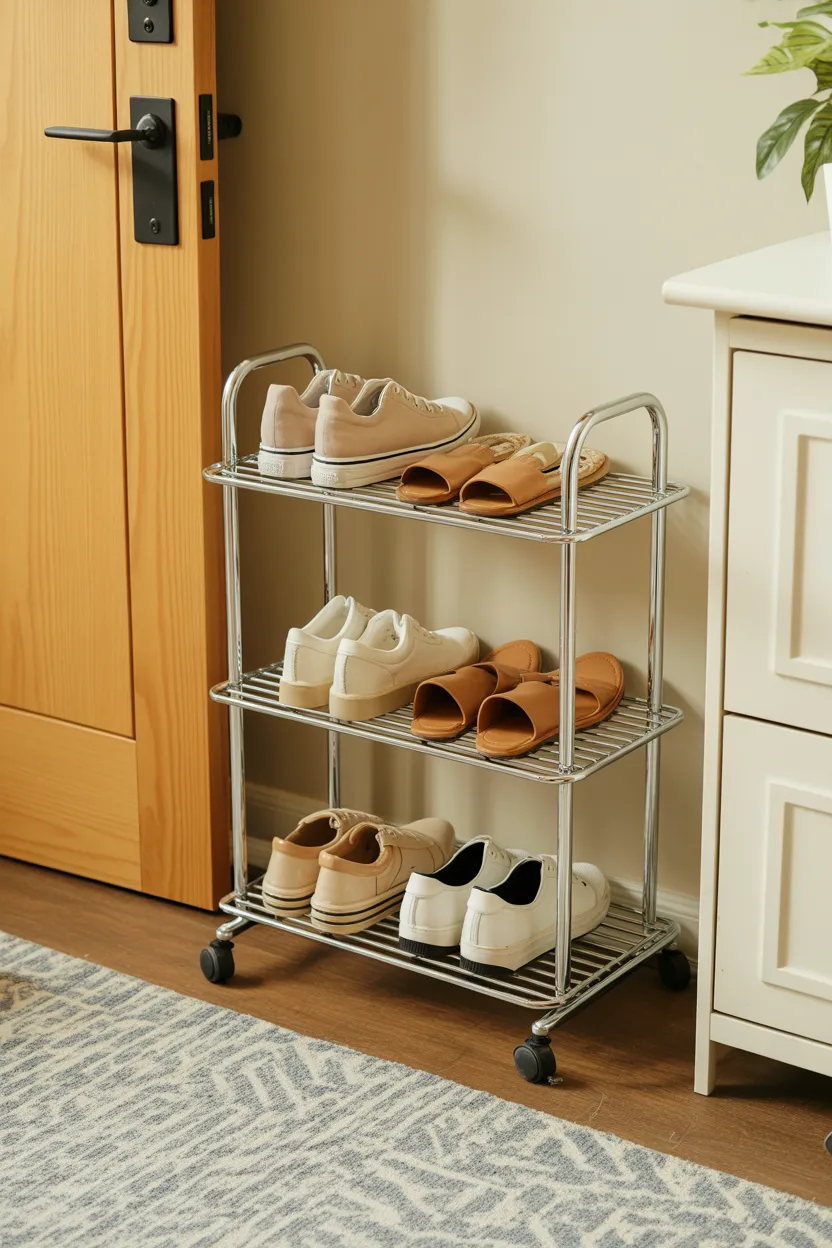
A rolling shoe cart gives you storage that moves. You can keep it by the door during busy weekdays and roll it into a closet when guests come over. Honestly, furniture with an escape plan feels smart.
This idea works great for renters and people who change layouts often. You don’t need screws, anchors, or permanent placement. Just roll, park, and organize.
Choose a cart with locking wheels. Without locks, the cart may drift around every time someone grabs shoes. Nobody needs a shoe cart that behaves like it has weekend plans.
Rolling carts also help with seasonal shoes. Use one for winter boots, kids’ sports shoes, or daily sneakers. When the season changes, roll the whole thing somewhere else.
12. Stackable Shoe Cubes for Custom Storage
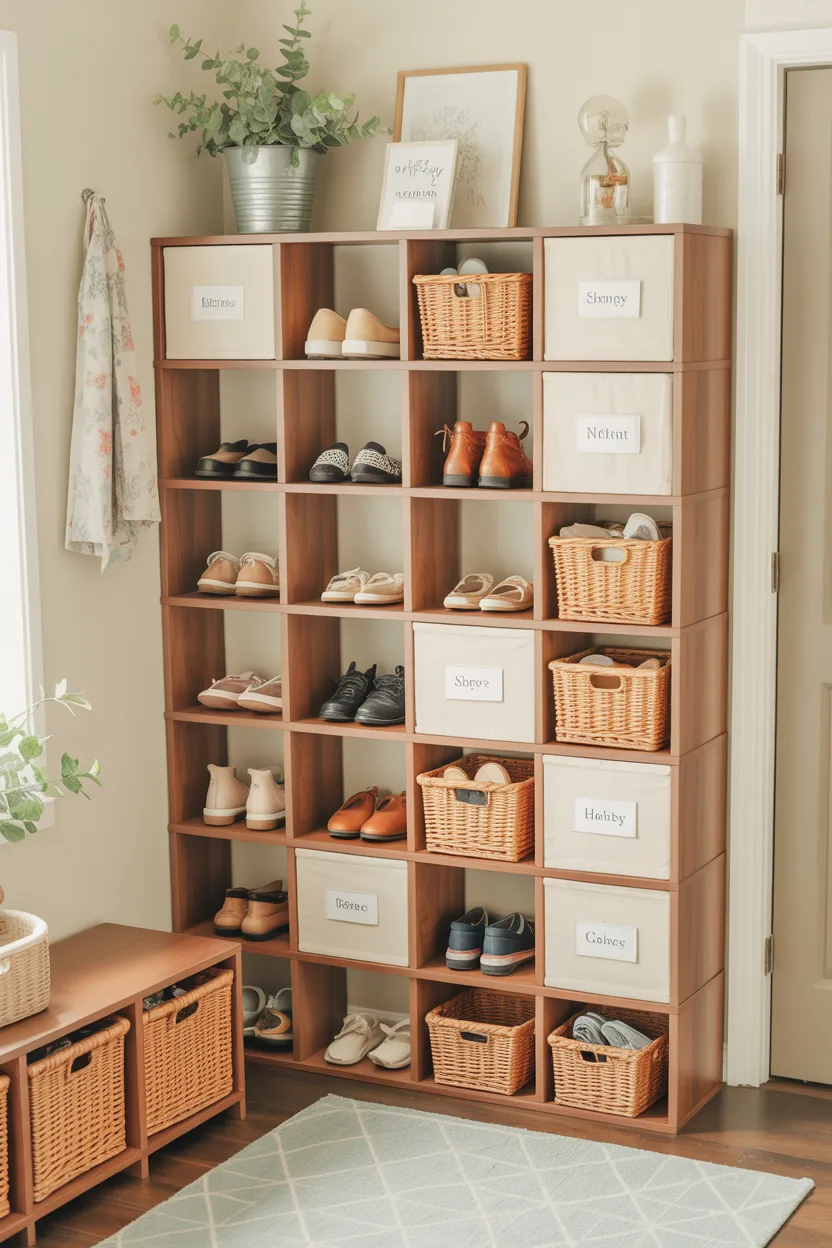
Stackable shoe cubes let you build storage around your space. You can stack them tall, spread them wide, or create a custom shape around awkward corners. That flexibility makes them useful in real homes, where walls rarely cooperate.
Shoe cubes keep pairs separated and easy to find. Each person can get a row, column, or section. This works especially well for families because nobody wants to hear “Where are my shoes?” before coffee.
Choose sturdy cubes if you plan to stack them high. Lightweight cubes may work for sandals, but they can wobble under heavier shoes. Safety matters, especially near the front door where people rush.
This idea also grows with your needs. Add more cubes when your shoe collection expands, which somehow happens even when nobody admits buying more shoes.
Also Read: 23 Orange Couch Living Room Makeover Ideas That Pop
13. Modular Wire Grid Shoe Rack
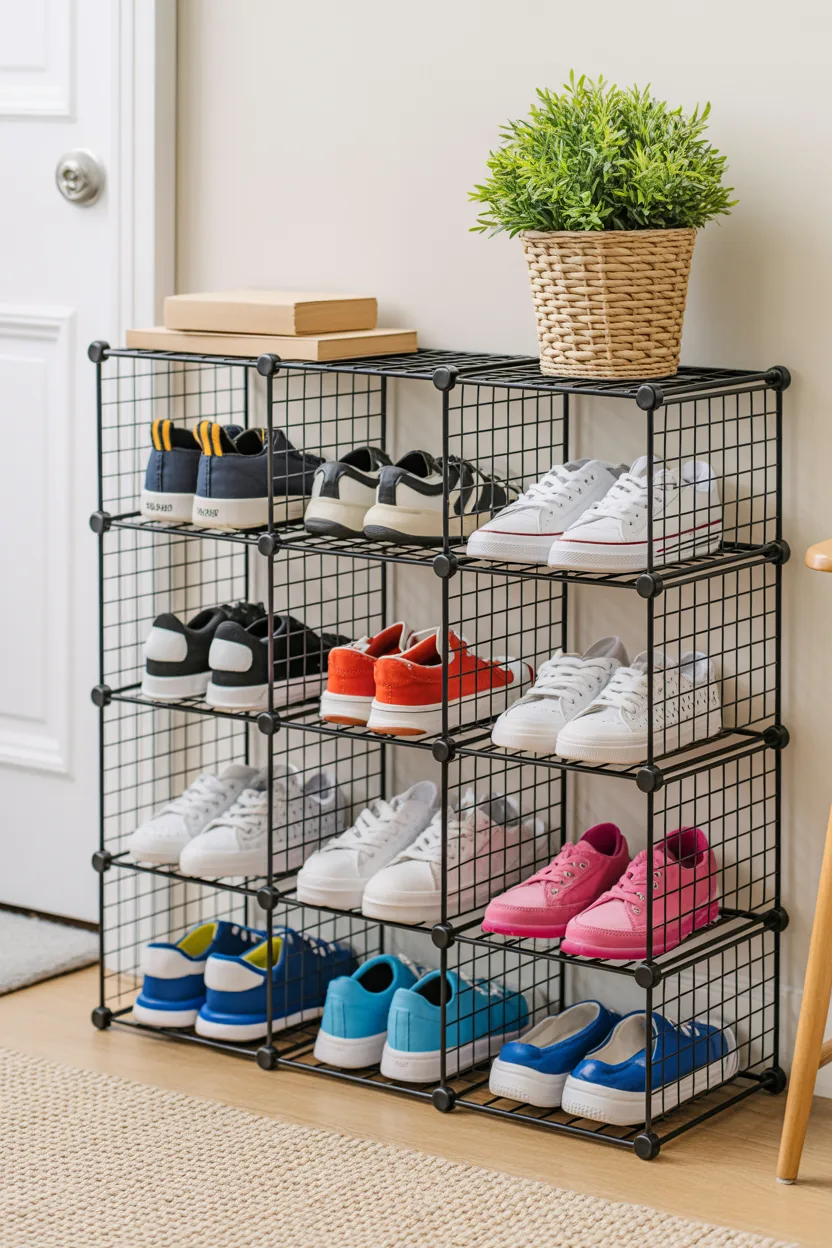
A modular wire grid shoe rack gives you flexible, budget-friendly storage. You connect wire panels into cubes, shelves, or taller units. It may not win a design award, but it gets the job done.
Wire grid racks work well for casual shoes, kids’ shoes, and sporty footwear. The open design allows airflow, which helps damp shoes dry faster. That matters if your household deals with rain, mud, or sweaty sneakers.
You can reshape the rack whenever your needs change. Make it taller for more shoes, wider for family storage, or smaller for a closet. IMO, that flexibility makes it one of the most practical entryway shoe organizer ideas.
Just make sure you connect the panels firmly. A loose grid rack can collapse at the worst possible moment, usually when you already run late.
14. Boot Tray With Rack for Wet Weather
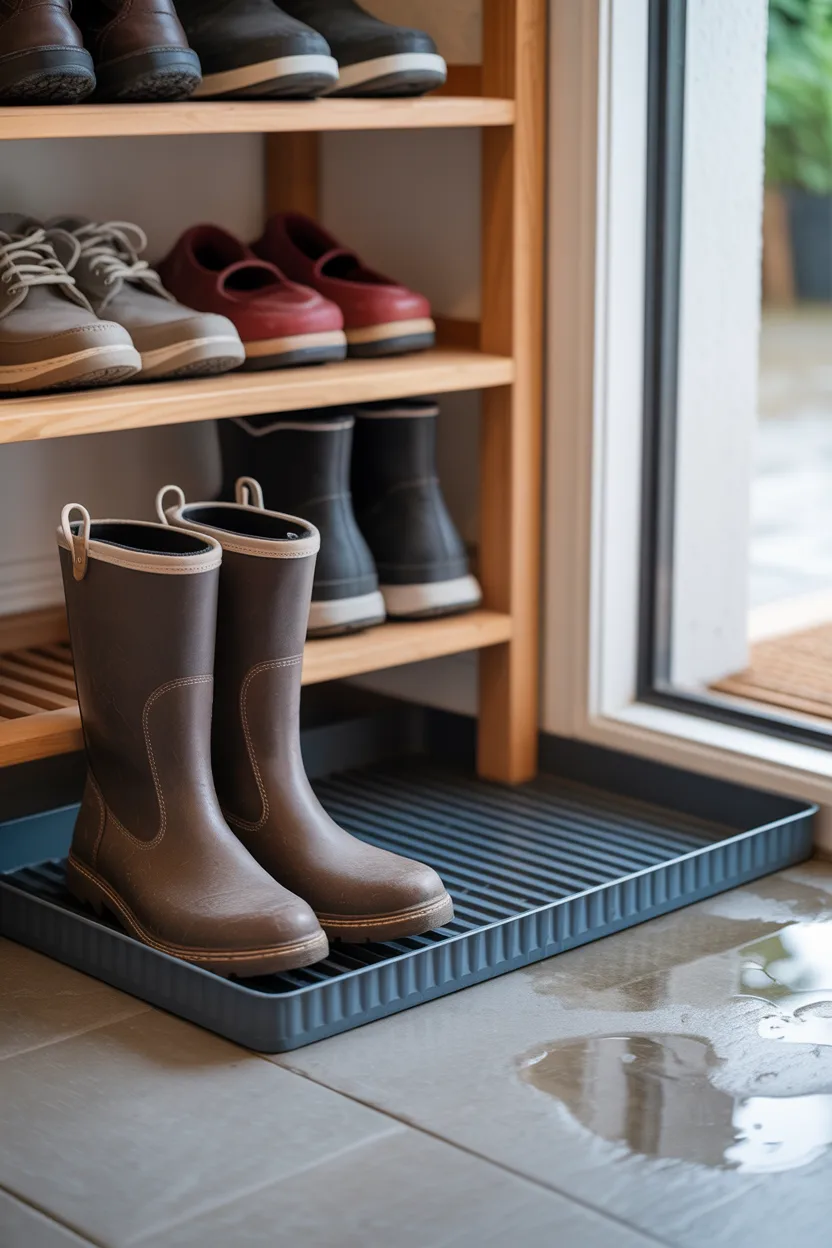
A boot tray catches mud, water, snow, leaves, and whatever else shoes drag inside like tiny outdoor souvenirs. Add a rack above it, and you get a simple wet-weather shoe station.
This setup protects your floor and keeps wet shoes contained. Place it near the front door, garage entry, mudroom, or back door. It works especially well in rainy or snowy climates.
Look for a boot tray with raised edges. Those edges stop water from spreading across the floor. Add a rack with open slats so shoes dry better instead of sitting in puddles.
This idea may not look fancy, but it solves a real problem. And honestly, protecting your floors beats pretending mud has “rustic charm.”
15. Ladder Shelf Shoe Rack With Style
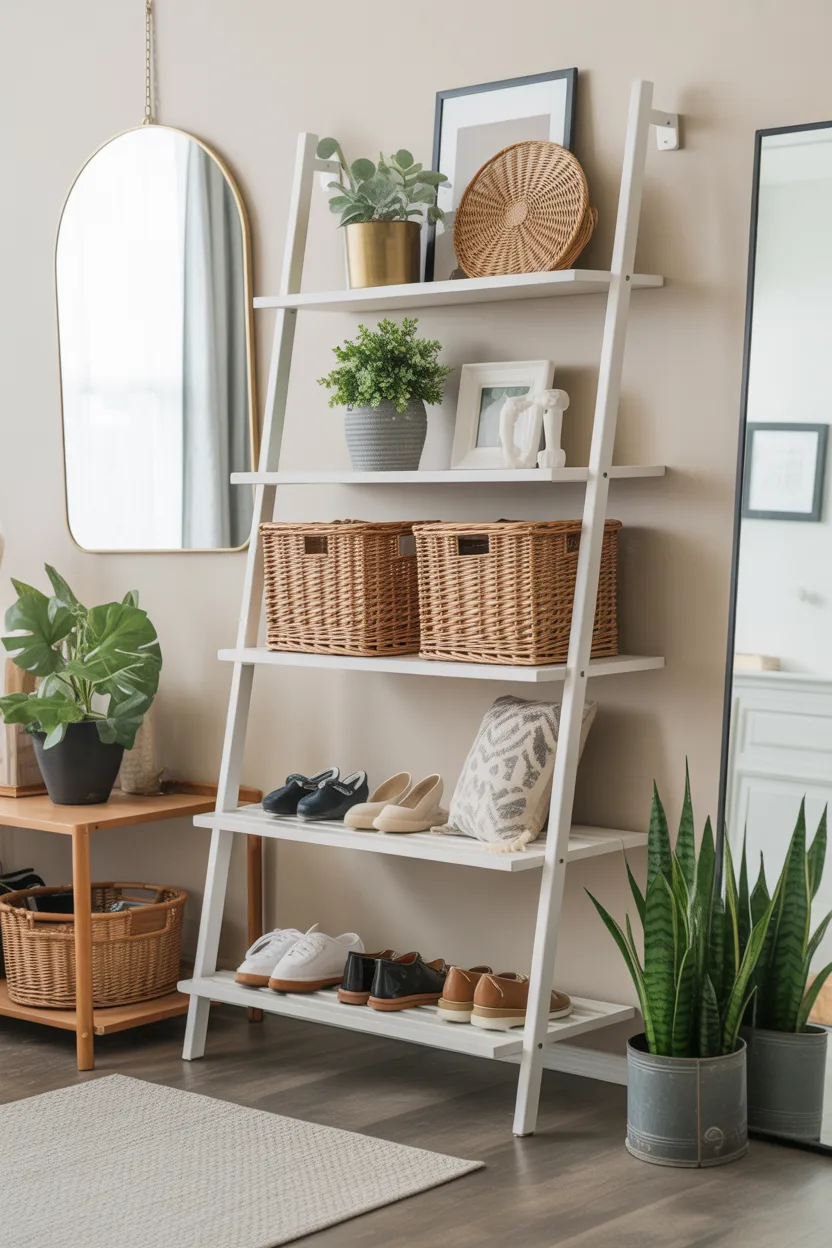
A ladder shelf adds height, style, and storage to your entryway. Use the lower shelves for shoes and the upper shelves for baskets, hats, plants, or decor. It looks more like furniture and less like a shoe rack, which can help a lot.
A ladder shelf works best when you want storage that feels decorative. It suits casual, modern, farmhouse, and boho entryways. The angled design adds visual interest without feeling too bulky.
Keep daily shoes on the bottom shelves. Use baskets on upper shelves for small items like gloves, scarves, and dog supplies. This keeps the whole area tidy and useful.
Compared with a standard shoe rack, a ladder shelf stores fewer shoes. But it brings more style, so it earns its place when looks matter.
16. Corner Shoe Rack for Awkward Spaces
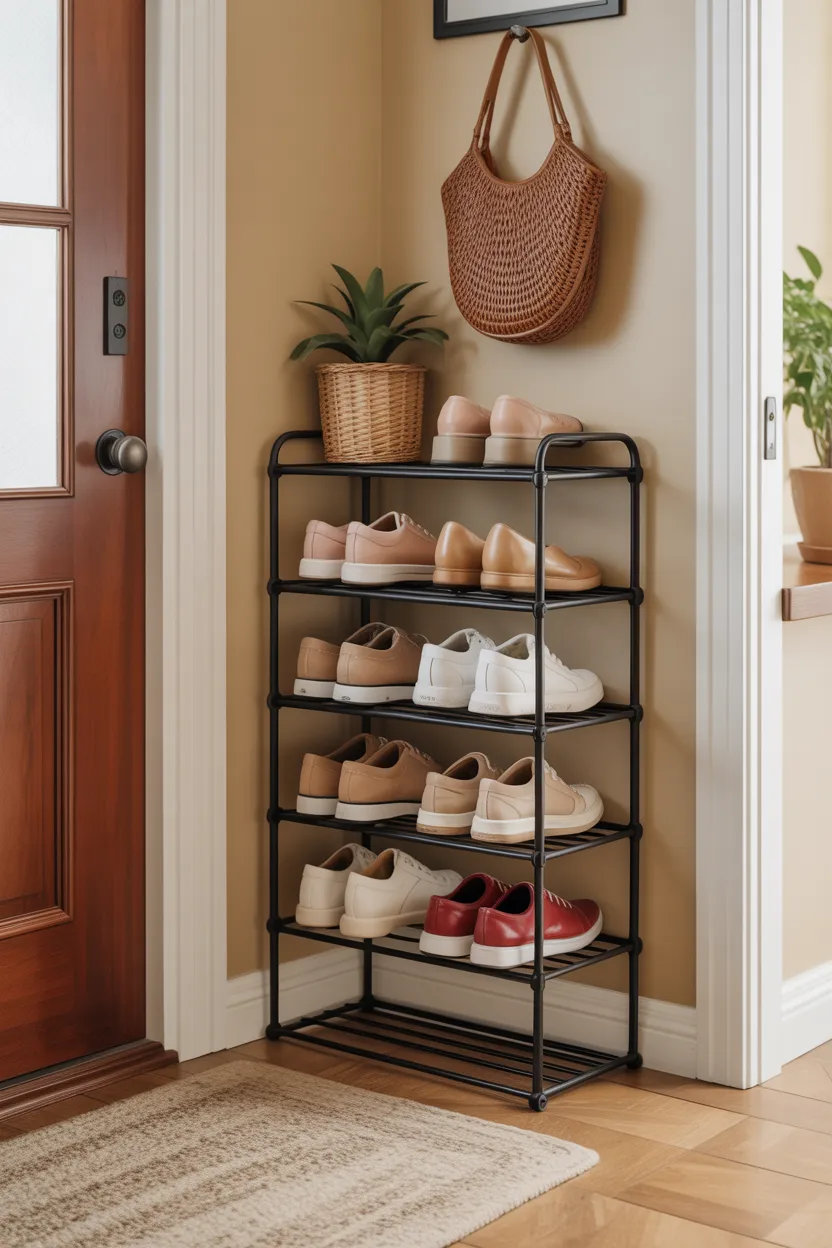
Corners often sit empty because regular furniture ignores them. A corner shoe rack turns that awkward space into useful storage. If your entryway has a weird nook, this idea might solve it beautifully.
Corner shoe racks work well in small foyers, apartment entries, and narrow hallways. They tuck shoes into spaces that usually collect dust or random bags. Why let a corner sit there doing absolutely nothing?
Choose a rounded or triangular rack to save space. Rounded edges also protect shins, and your future self will appreciate that small mercy.
This option works best for daily shoes, not a huge collection. Keep the most-used pairs there and move extras to a closet or bedroom storage.
Also Read: 22 Bright Bedroom Color Ideas for Small Rooms That Open Up
17. Industrial Pipe Shoe Rack
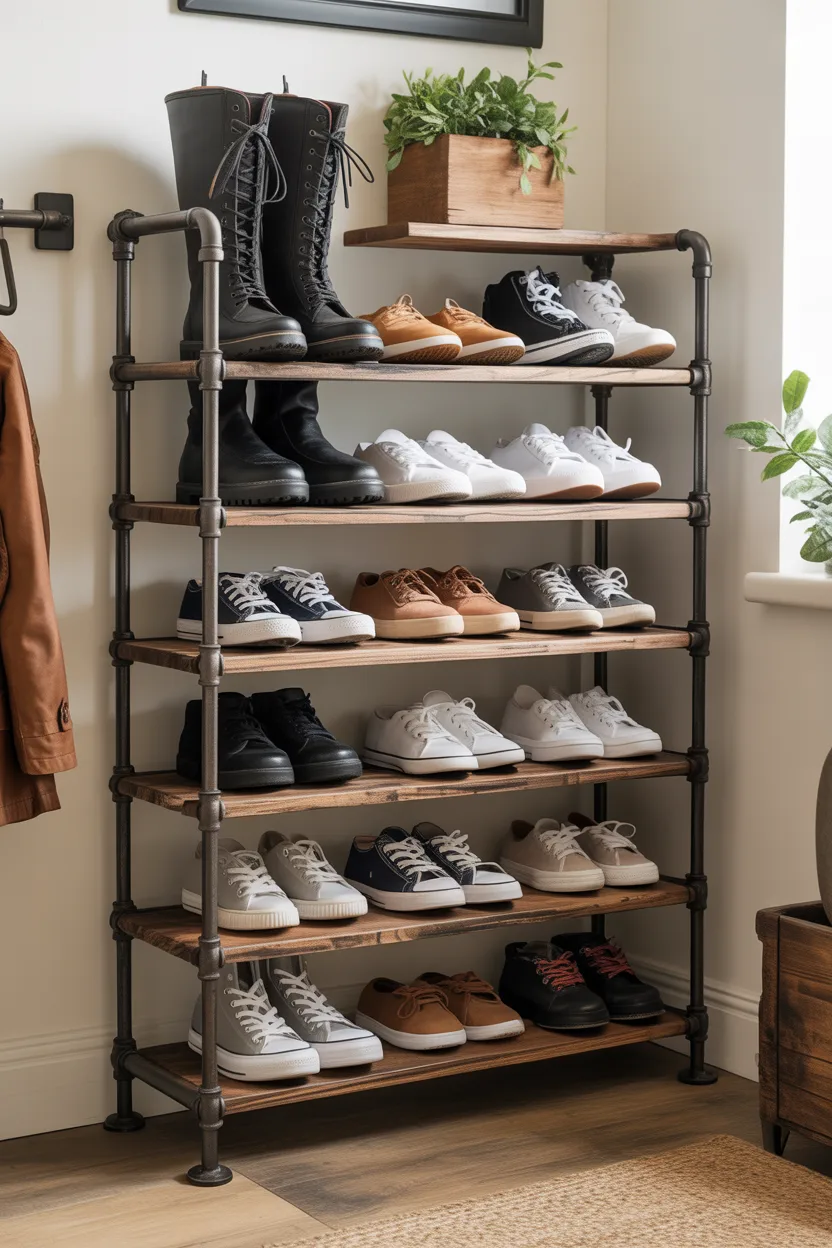
An industrial pipe shoe rack brings strength and character to your entryway. It usually combines metal pipes with wood shelves, which gives it a rugged, sturdy look. If your home has black hardware, wood accents, or exposed brick, this style fits right in.
This shoe rack idea works well for heavy shoes and boots. Work boots, hiking shoes, and chunky sneakers need stronger shelves than flimsy fabric racks can offer. A pipe rack handles daily abuse better.
You can buy one ready-made or make one yourself if you enjoy DIY projects. Just measure carefully and choose solid wood shelves. A wobbly industrial rack kind of ruins the whole “built tough” vibe.
Compared with bamboo or plastic storage, industrial shoe racks feel heavier and more permanent. Use one when you want durability and style in the same piece.
18. Woven Basket Shoe Storage
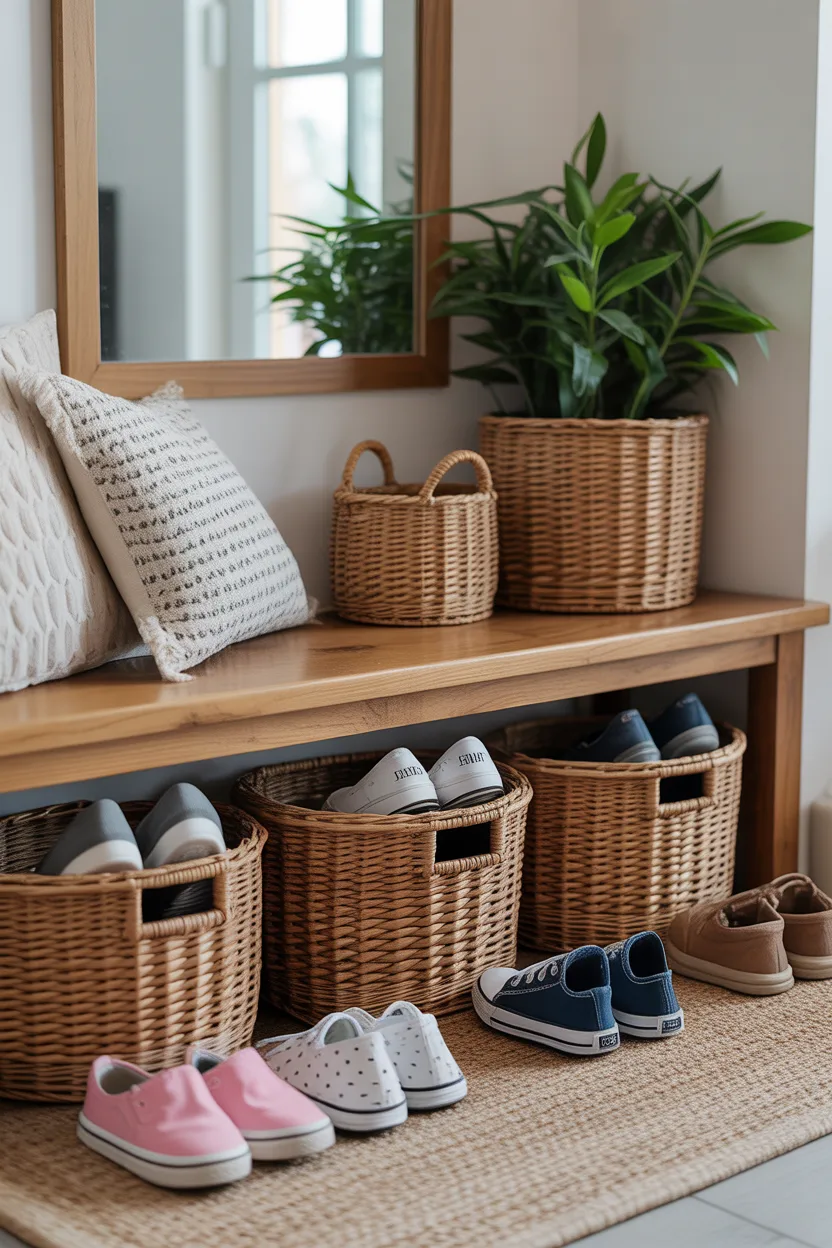
Woven baskets make shoe storage look relaxed and tidy. You can place them under a bench, inside cubbies, beside a console, or in a closet. They hide clutter while keeping shoes easy to reach.
Basket shoe storage works best for casual shoes, slippers, sandals, and kids’ shoes. It also helps people who never line shoes up perfectly. You toss the pair in, and the basket makes the mess look intentional.
Choose baskets with handles if you move them often. Choose lined baskets if you worry about dirt rubbing against the fibers. For muddy shoes, use a boot tray instead because baskets do not enjoy sludge.
I love baskets because they forgive imperfect habits. Not every home needs magazine-level shoe alignment. Sometimes “contained” feels like a victory 🙂
Also Read: 21 Teen Girl Bedroom Color Ideas That Feel Cute and Stylish
19. Pull-Out Shoe Drawer Under a Bench
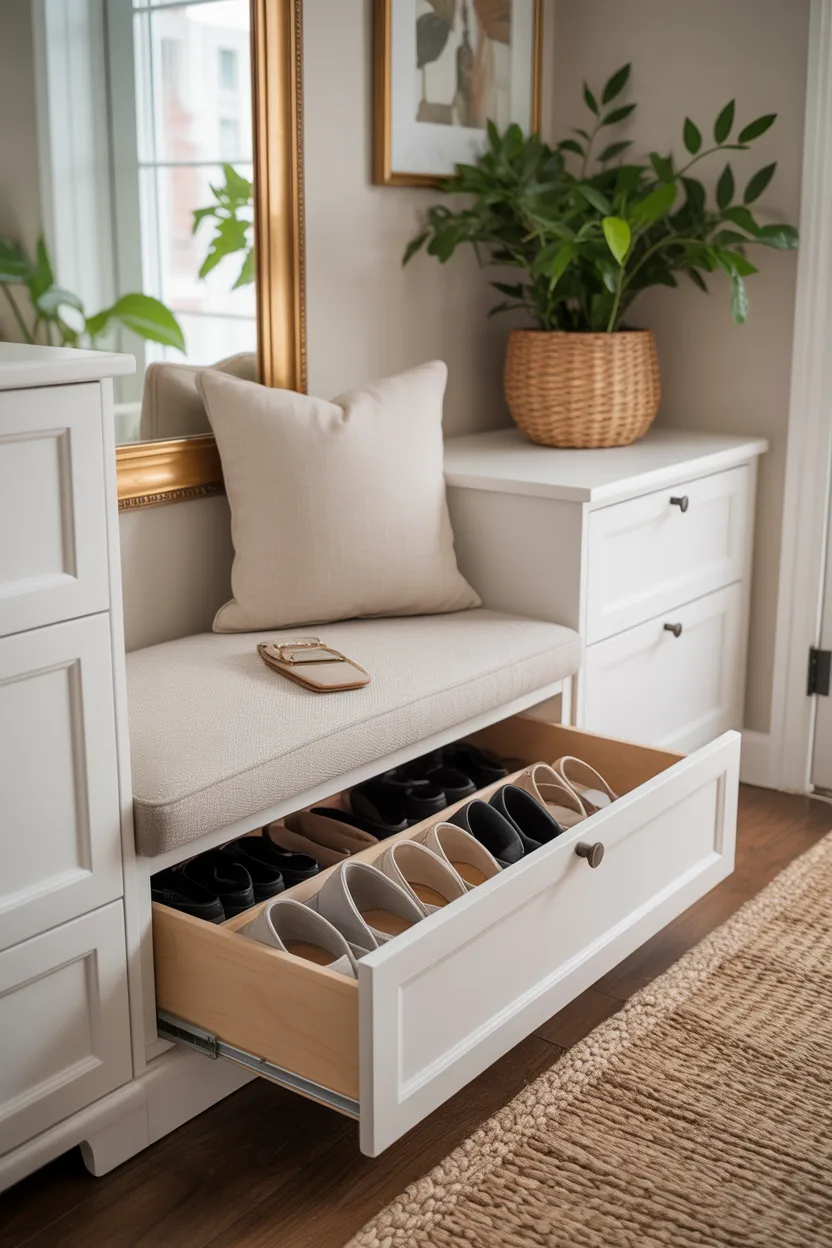
A pull-out shoe drawer hides shoes under a bench and keeps the entryway looking clean. You sit on the bench, slide the drawer open, grab your shoes, and close it again. Nice and simple.
This idea works well when guests see your entryway right away. The drawer hides visual clutter, while the bench adds function. You get storage, seating, and a cleaner look in one setup.
Choose smooth drawer glides. A sticky drawer will annoy everyone, and annoyed people will leave shoes on the floor. The whole point of smart shoe storage involves making the right habit easy.
This idea costs more than open shelving, but it looks more polished. It suits smaller homes where every piece of furniture needs to work hard.
20. Rotating Shoe Rack for Compact Storage
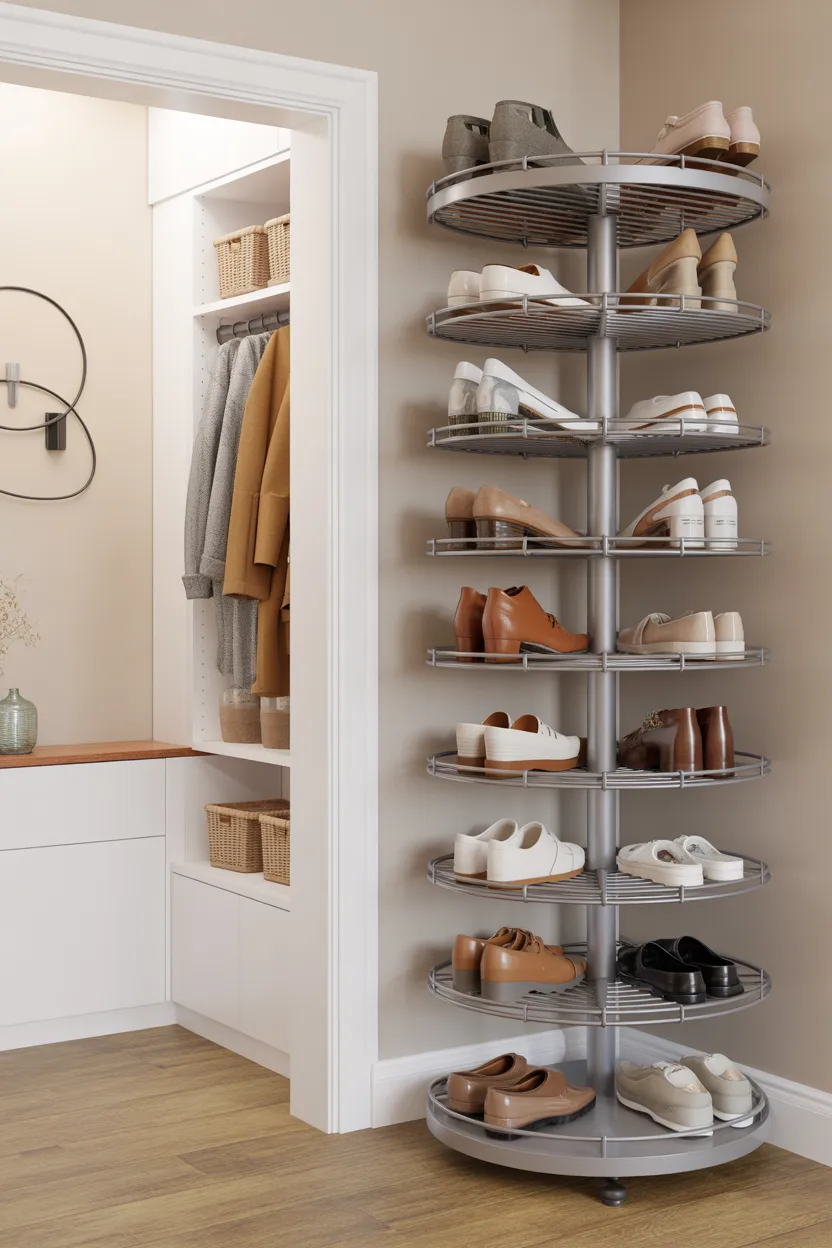
A rotating shoe rack stores several pairs in a small footprint. You spin the rack to find the pair you want, which feels oddly satisfying. Tiny pleasures matter, especially before your first coffee.
This shoe storage idea works best in entry nooks, walk-in closets, or mudrooms with enough clearance. You need space for the rack to rotate freely. A tight hallway may make it feel awkward.
Rotating racks help people who own many shoes but still want quick access. You can see more pairs without spreading them across the floor. That alone can save your entryway from turning into a shoe maze.
Compared with a standard vertical tower, a rotating rack feels easier to browse. It also adds a small boutique vibe, minus the salesperson asking if you need another size.
21. Kid-Friendly Shoe Cubbies With Name Tags
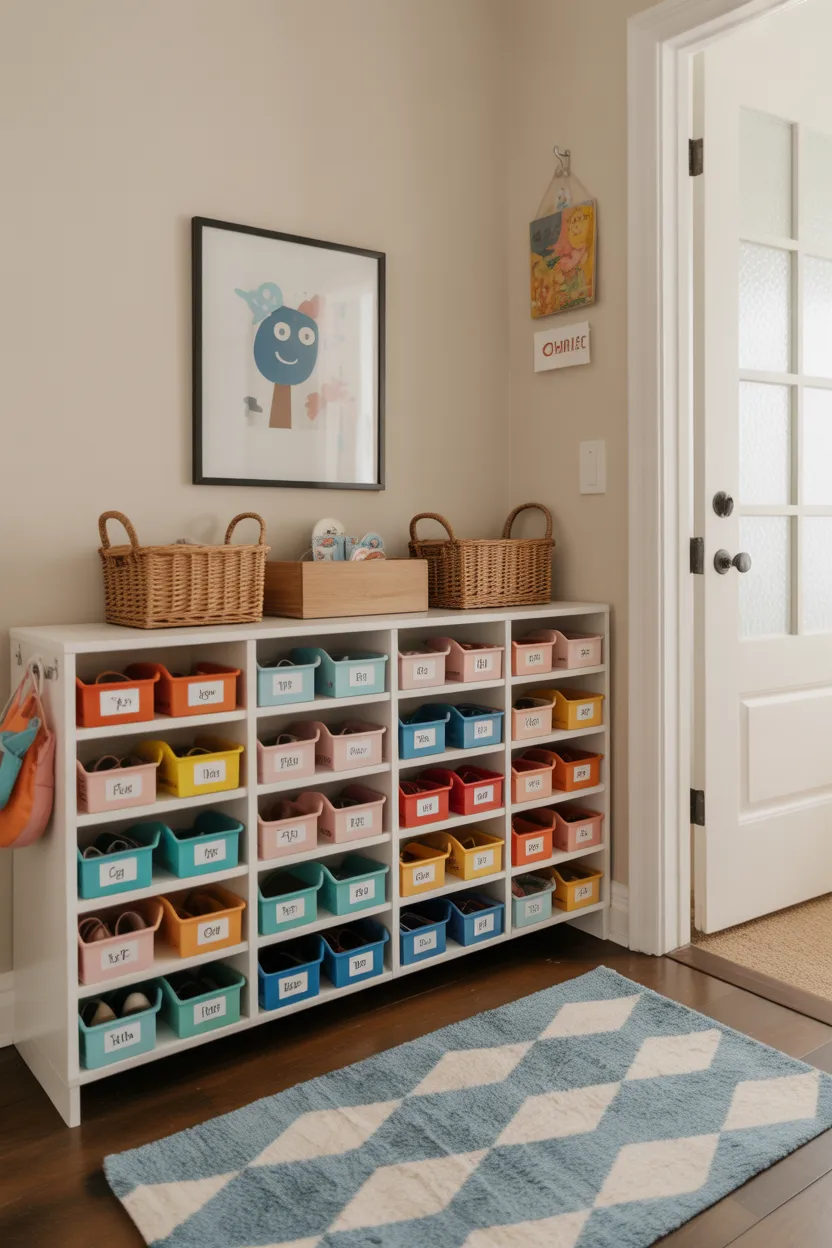
Kids need simple storage. If they need to open doors, sort shelves, or think too hard, they will choose the floor. Adults do this too, but let’s not expose ourselves today.
Kid-friendly shoe cubbies keep entryway shoes organized and easy to return. Give each child a cubby, basket, or labeled shelf. Use name tags, color labels, or picture labels for younger kids.
Place cubbies low enough for kids to reach. If they can use the system without help, they have a better chance of actually using it. Revolutionary, I know.
Add a small basket nearby for socks, mittens, or sports gear. Mornings feel much smoother when everyone knows where things belong. Ever tried finding cleats five minutes before leaving? That kind of stress builds character, but no thanks.
22. Peg Rail Plus Low Shoe Shelf
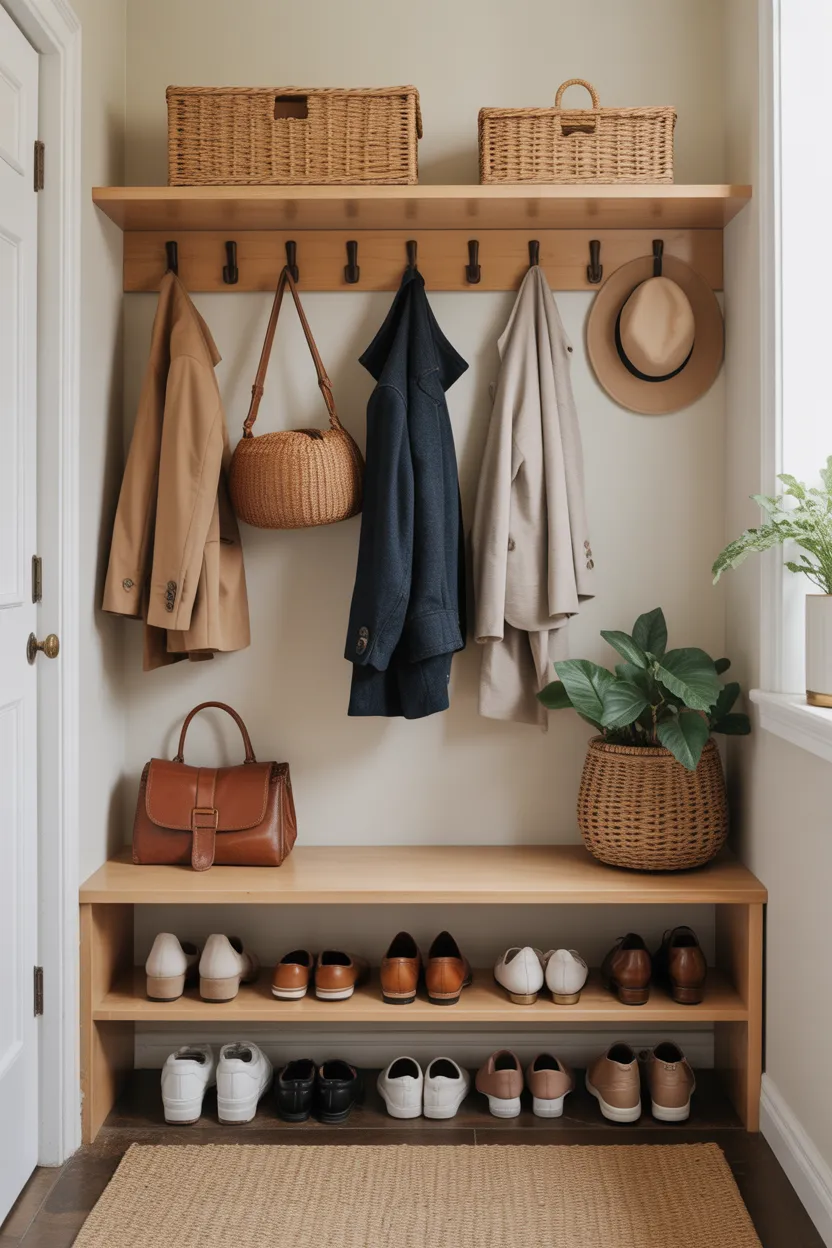
A peg rail above a low shoe shelf creates a simple entryway drop zone. Hang coats, bags, hats, keys, dog leashes, and umbrellas above. Store shoes below.
This setup works because it keeps daily essentials in one place. You walk in, hang your bag, kick off shoes, and everything lands where it should. That small routine makes the entryway feel calmer.
Choose a low shelf with enough depth for your biggest everyday shoes. Add a boot tray beside it if your area gets rain or snow. Keep the top of the shelf clear so the zone does not turn into a clutter magnet.
This idea works in almost every style of home. Use wood for warmth, black metal for contrast, or painted rails for a cottage look.
Also Read: 22 Bedroom Color Ideas That Complement Black Furniture
23. DIY Wooden Crate Shoe Rack
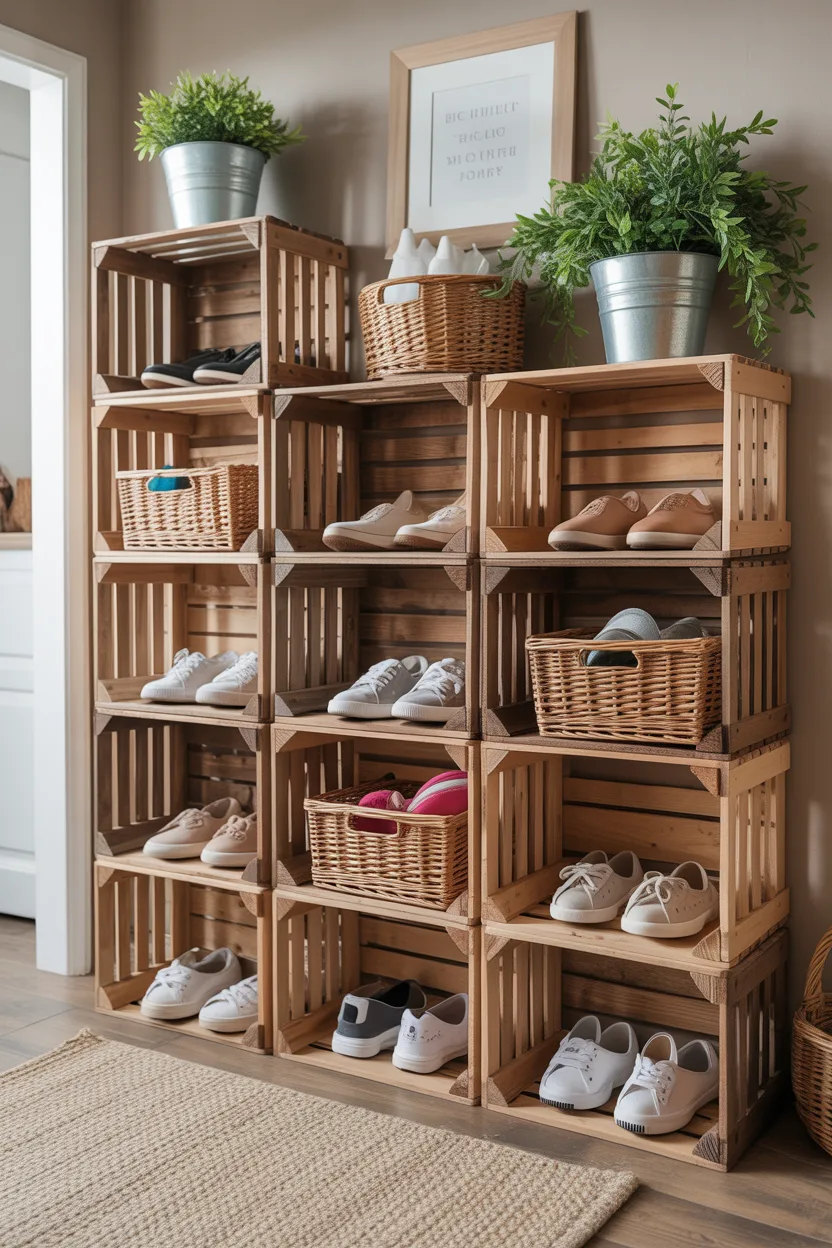
A DIY wooden crate shoe rack gives you affordable, flexible entryway storage. Stack crates vertically, line them up horizontally, or create a staggered shape against the wall. You can make the layout fit your exact space.
Wooden crates create cubby-style shoe storage without custom built-ins. Paint them, stain them, or leave them natural. This makes them great for farmhouse, rustic, eclectic, or casual entryways.
Secure stacked crates together with screws or brackets. Also anchor tall stacks to the wall if kids or pets run through the entryway. A crate avalanche may sound funny, but it loses charm fast.
This idea gives you room for shoes, baskets, and small accessories. It also lets you change the setup later, which helps if your space or shoe collection changes.
Bonus Tips to Keep Your Entryway Shoe Rack Neat
Even the best shoe rack needs a few simple habits. I wish storage furniture could organize everything by itself, but apparently furniture still refuses to do unpaid labor. Rude.
The biggest rule: keep only daily shoes near the door. Move dress shoes, off-season boots, and backup sneakers to a closet or bedroom storage. Your entryway should handle daily traffic, not your entire shoe collection.
Try these easy habits:
- Keep one or two pairs per person near the door
- Use a boot tray for wet or muddy shoes
- Move seasonal shoes out of the entryway
- Wipe shelves once a week
- Give each person a clear shoe zone
- Use baskets for loose items
- Check the rack monthly and remove extras
A neat entryway depends more on limits than perfection. If the rack holds eight pairs, don’t force it to hold twenty. The rack will lose, and your hallway will look annoyed.
Also, match storage to your household’s personality. Open racks help busy families. Closed cabinets help tidy-minded people. Baskets help everyone who likes the idea of organizing but also enjoys tossing things quickly.
Final Thoughts: Pick the Shoe Rack Your Real Life Will Use
The best shoe rack ideas make your entryway easier to use. A slim rack saves space, a bench adds comfort, a closed cabinet hides clutter, and cubbies help families stay organized. Good shoe storage should feel simple, not like another chore.
Start with your biggest problem. Do you need more space? Choose vertical storage. Do you hate seeing shoes? Choose a cabinet. Do wet boots wreck your floor? Grab a boot tray with a rack.
Your entryway does not need perfection. It just needs a smart spot for the shoes you use every day. Pick one idea, try it, and give that shoe pile a proper home before it starts claiming legal rights to your hallway.